
Open-Air Exhibition: “Sociality as a Political Force”
A vibrant civil society is the foundation of every functioning democracy. It encompasses all areas of voluntary engagement in which citizens collectively take responsibility for society. People come together to pursue shared interests and advocate for the common good. In doing so, they contribute to democratic culture. Engagement takes many forms: activities in sports and cultural clubs, volunteer work in nonprofit initiatives, or protesting against injustices.
How does civil society make the state democratic?
Civil society, the state, and the private sector are in constant dialogue. Civil society groups monitor government actions, demand transparency and a voice in decision-making, and bring social issues to the political agenda. Local initiatives, for example, advocate for the preservation of green spaces; environmental organizations influence legislative processes; and human rights organizations call for the observance of rights. At the same time, civil society needs the government to ensure that the rules of democracy are upheld. Civil society drives economic change: consumer initiatives advocate for sustainable production methods, labor unions fight for fair working conditions, and environmental movements influence corporate strategies.
A vibrant civil society reflects social developments and drives them forward. Yet it should not be idealized: While most organizations act with the firm belief that they are promoting the common good, what is understood by “common good” is by no means uniform. Civil society initiatives are driven by a variety of values and ideas—not all of which are democratic. The strength of a democracy lies in its ability to tolerate such differing positions and to foster discourse. Crucial to this is the willingness to resolve conflicts peacefully and to express opinions through democratic means. A democracy thrives on the diversity of voices. The exhibition showcases the hubs of political movements and highlights the interplay between civil society and the state—a process that continually shapes and advances democracy.
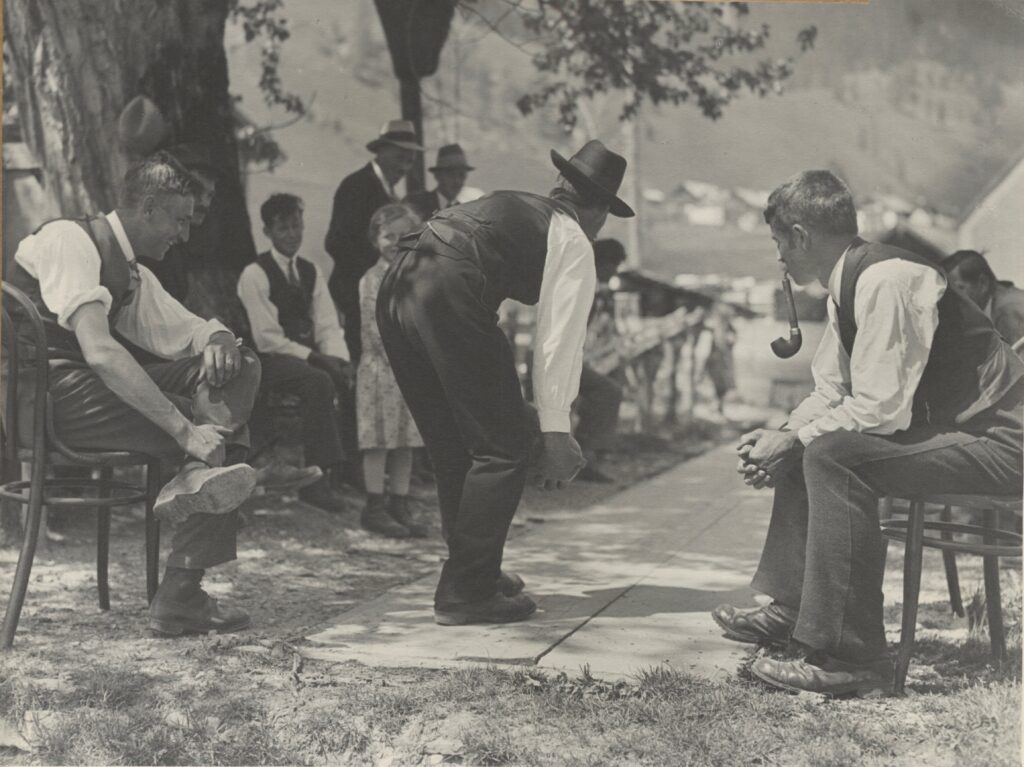
Sports and cultural clubs. Civil society is much more than just political engagement. Social gatherings and community activities are crucial to the functioning of a democracy. Political scientist Robert D. Putnam demonstrated in his groundbreaking study *Bowling Alone* that informal social contacts—such as bowling together—strengthen cooperation in society. Those who bowl alone not only remain on the outside of social interaction but also withdraw from the civic discourses that take place within the context of active club life. The decline in such personal encounters weakens the sense of community and thus impairs democratic participation.
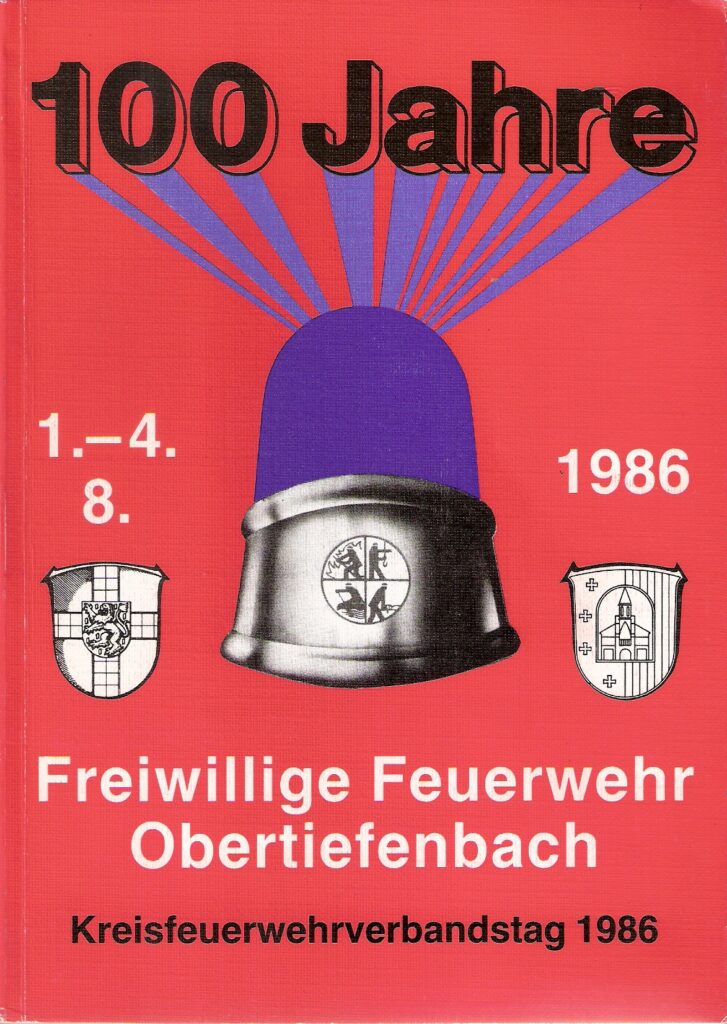
Volunteer Fire Department. Civic engagement can also support the functioning of the state in very practical ways: While welfare organizations supplement government social services, volunteer firefighters make an important contribution to public safety. Volunteer fire departments emerged in the 19th century from civic initiatives to combat fires, as government structures were often insufficient to extinguish fires quickly and effectively. They are not only an indispensable part of emergency response but also a symbol of community engagement and solidarity, which bring people together and strengthen local structures. The first volunteer fire department, as we understand it today, was founded in Meissen in 1841.
How did pre-democratic civil society function?
In pre-democratic times, civil society was often limited in its ability to develop and had little influence. Yet even then, people came together based on shared interests and organized themselves for the common good. Places such as churches, schools, and private homes bear witness to these early civil society movements.
In the early 19th century, an early form of civil society began to develop in Germany. Numerous civic associations sprang up, whose primary concerns were initially not very political: singing, gymnastics, and shooting clubs, as well as student fraternities, were dedicated first and foremost to fostering social interaction and tradition. A certain level of social status was required to join these groups. This early form of bourgeois self-organization reflected a growing need for cohesion and cultural identity outside of state institutions. However, the authoritarian state viewed these organizations with suspicion. Associations were regarded as potential breeding grounds for dissenting thought and politically undesirable activities. The state responded by restricting freedom of assembly, banning associations, and imposing strict controls.
It was precisely this state repression that strengthened civil society in the long run. Because the freedom to self-organize was curtailed, skepticism toward the authoritarian state developed. Civil society gradually began to demand civil liberties and limits on state control. In this interplay between control and the civic pursuit of autonomy, civil society grew over the decades into a politically significant force. Increasingly politicized associations and movements emerged that called for democratic reforms—ranging from labor unions to women’s organizations to cooperatives. These groups advocated for greater social justice and political participation. At the same time, many associations emerged that promoted patriotic and nationalist ideas. All these groups were united by their opposition to the authoritarian state.
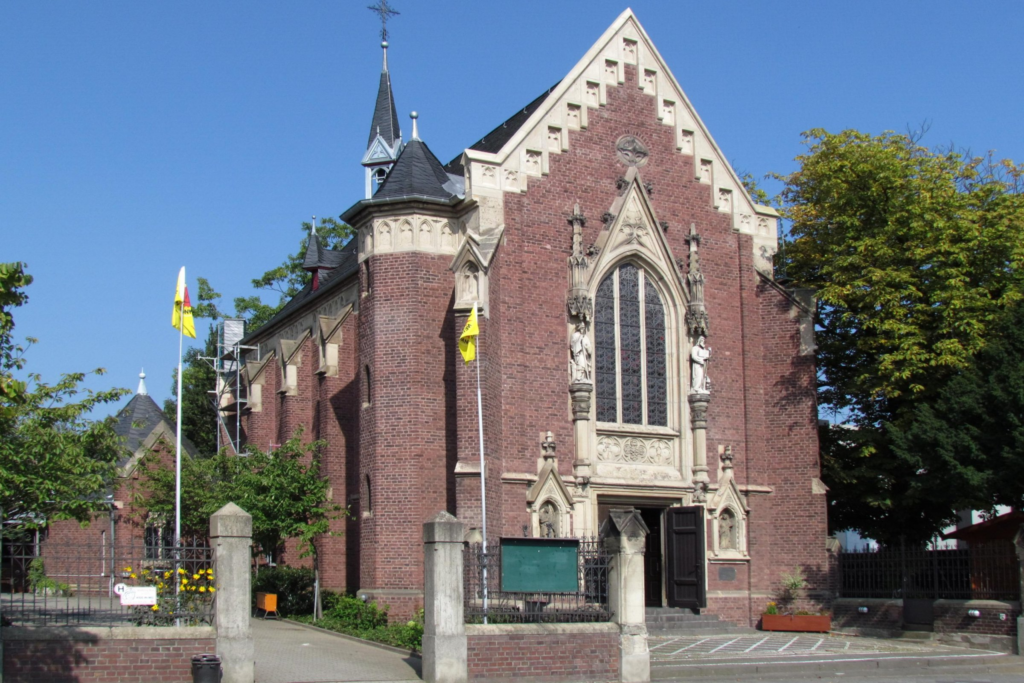
Brandts Chapel, Mönchengladbach, North Rhine-Westphalia. With the construction of the chapel in 1896, the industrialist Franz Brandts, chairman of the People’s Association for Catholic Germany, created not only a sacred space but also a center for political and social Catholicism. Through events, educational programs, and concrete reform projects, the aim was to strengthen the social integration and political awareness of Catholic workers and thereby promote the religious, social, and political participation of the Catholic segment of the population. Combining civic engagement based on Christian values with practical social work is a principle that civic organizations such as Caritas still follow today.
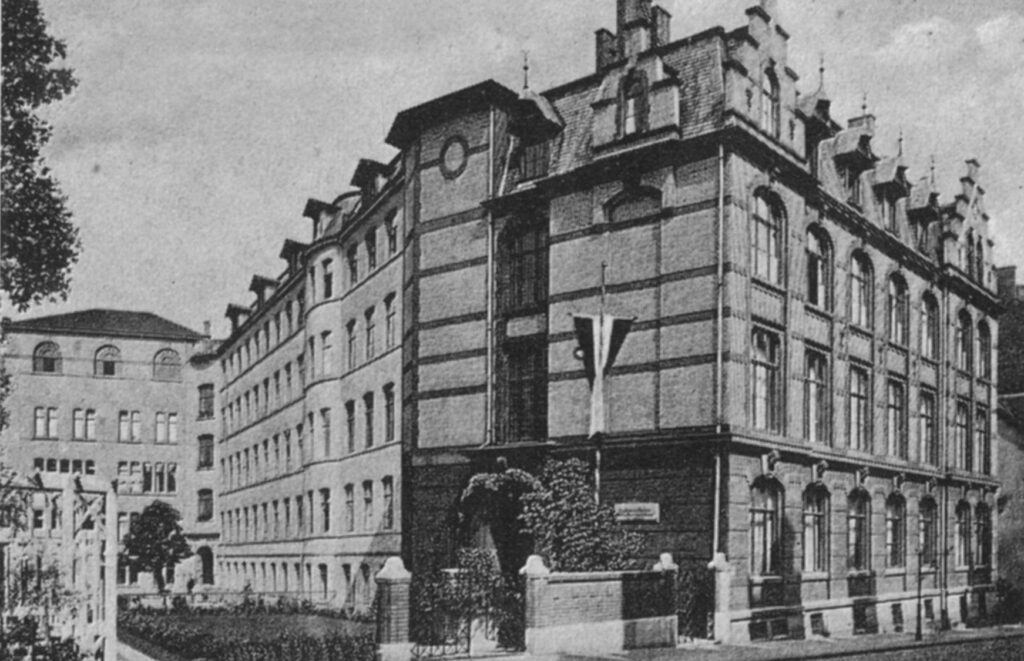
Vocational School for Confirmed Girls, Kassel, Hesse. At a time when state institutions largely neglected the education and vocational training of women—particularly in the areas of higher education and career preparation—civil society took the initiative to fill this gap. One example of this is the vocational school founded in 1869 by the Kassel Women’s Education Association. The school offered middle-class girls the opportunity to achieve professional independence, thereby opening up new life prospects for them beyond the traditional roles of wife and mother. The school developed into a center of the women’s movement in Kassel and contributed to the expansion of education, which, in the long term, paved the way for both reforms in girls’ schools and the opening of universities to women.
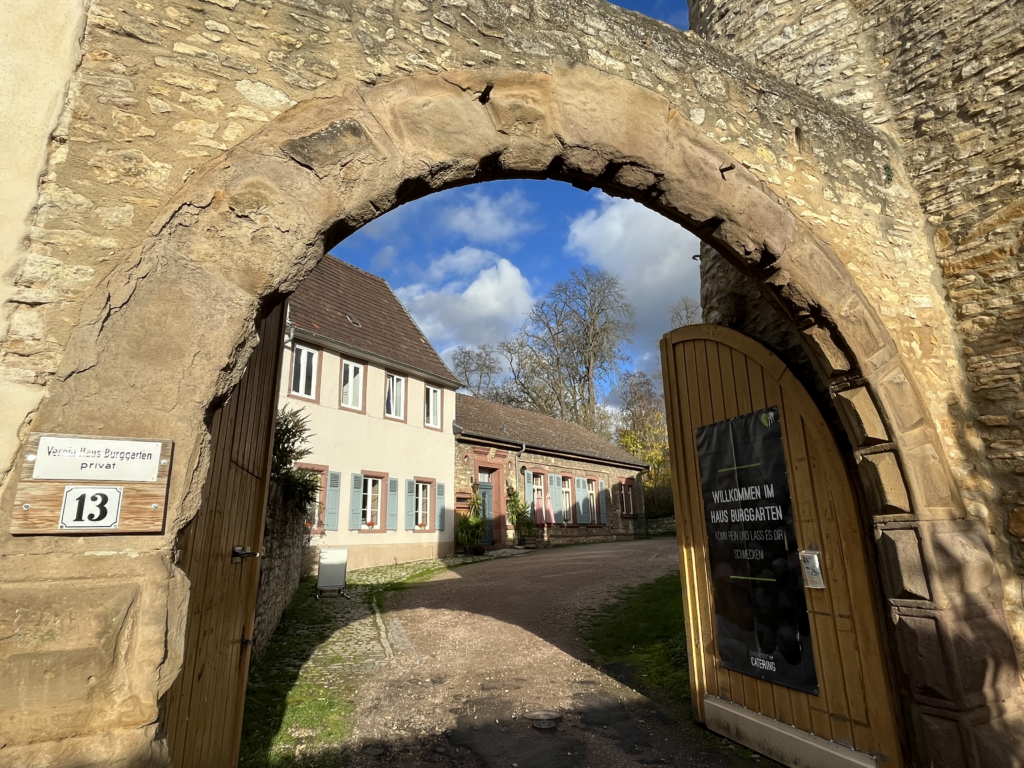
Haus Burggarten, Ober-Ingelheim, Rhineland-Palatinate. In the 19th century, the rooms of the Casino Society served as a venue for bourgeois public life and the formation of public opinion. The society, centered around Martin Mohr—who would later become a member of the Paulskirche and was a staunch democrat—served as a meeting place for educated men to exchange political views and promote liberal ideas. At that time, opportunities for political participation were scarce. Groups and associations of all kinds offered opposition forces a means of networking. They contributed to the politicization of broad segments of the population and to the professionalization of liberal and democratic forces in the Vormärz period and beyond. Many associations ran the risk of being banned—especially if they had a clearly political character, as was the case with the Casino Society. However, it was not banned until the Nazi dictatorship. By reorganizing as the Haus Burggarten e. V. association, the building and grounds were secured as an independent space for civil society. The former clubhouse of the Casino Society of Ober-Ingeheim is now used by the Haus Burggarten e. V. association.
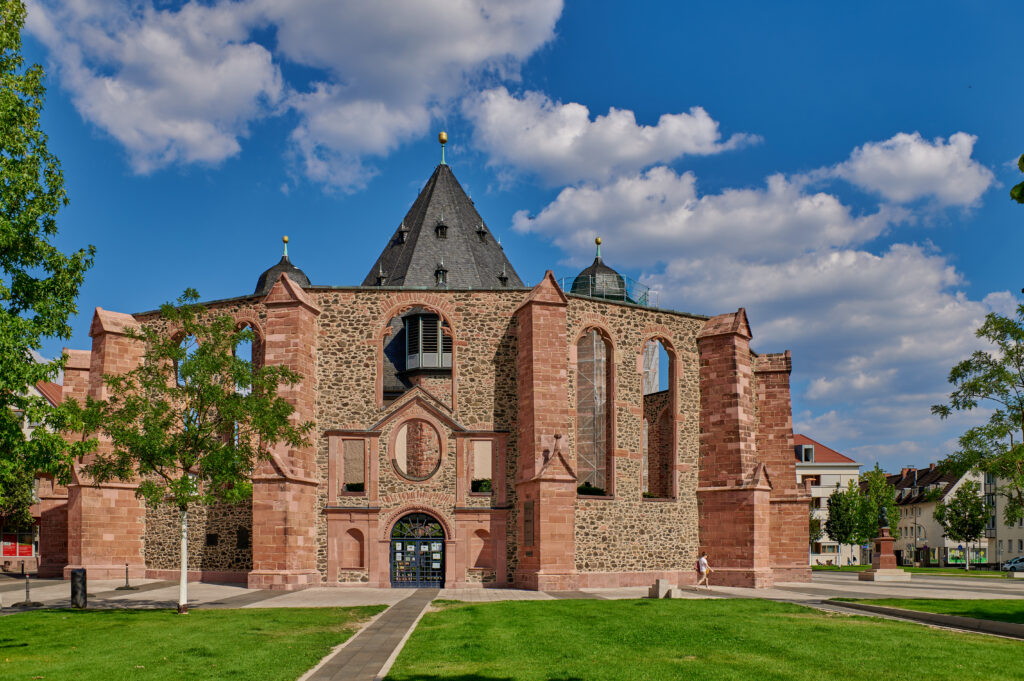
Walloon-Dutch Church, Hanau, Hesse. On April 3, 1848, the Walloon Church served as the venue for the first German Gymnastics Congress: Here, under the leadership of Ludwig Jahn and August Schärttner, all gymnastics clubs united to form the German Gymnastics Federation. The gymnastics movement combined physical exercise with political goals, particularly the promotion of unity and freedom in Germany. Patriotism—in the sense of selflessly promoting the common good—was a core element of the movement. The gymnastics movement was one of many new youth organizations that emerged toward the end of the 19th century. Vegetarians, the workers’ youth, conservationists, and the Wandervögel—politically, these movements were sometimes apolitical, sometimes radical, but all were united by a dissatisfaction with the prevailing conditions. After its destruction in World War II, only the smaller, formerly Dutch half of the church was rebuilt.
How does civil society function in democracies?
Only a democratic system of government creates the conditions in which civic engagement can flourish freely and confidently. From the Reichsbanner Schwarz-Rot-Gold during the Weimar Republic to protests in Münster’s market square and climate action on factory chimneys—these places demonstrate the diversity, dynamism, and impact of civic movements.
The first German democracy, the Weimar Republic, granted comprehensive fundamental rights and freedoms for the first time. Thanks to freedom of assembly, freedom of expression, freedom of the press, and the right to form associations and societies, an active civil society emerged in the 1920s. However, it was not only the diversity of groups advocating democratic values that grew, but also the number of organizations that were skeptical of democracy or even hostile to it. In the Federal Republic of Germany (FRG), civil society became an integral part of the democratic community beginning in the 1950s. Much of this civic engagement took place within middle-class circles, which made it difficult for disadvantaged groups to participate. In the GDR, civil society operated under different conditions. Although an active network of associations also emerged there, civic engagement was controlled by the state and often exploited for its own purposes. Nevertheless, there were niches within civil society where people created spaces of freedom that later contributed significantly to the mobilization during the Peaceful Revolution of 1989–90. In the 1970s, the term “civil society” became increasingly associated with anti-authoritarian and anti-dictatorial movements. The New Social Movements, which addressed issues such as environmental protection, peace, women’s rights, and human rights, were characterized by shared values and a transnational perspective. They saw themselves as part of a global community and developed new forms of mobilization through modern means of communication—such as the Internet. The Peaceful Revolution of 1989–90 was an expression of this new dynamic in civil society: Over the course of many years, courageous citizens had created spaces for freedom, built networks, and engaged in discourse—despite state control. The protests of the Peaceful Revolution, which ultimately led to the fall of the Berlin Wall, were the culmination of a long-standing civil society movement that demanded and drove the transition to democracy.
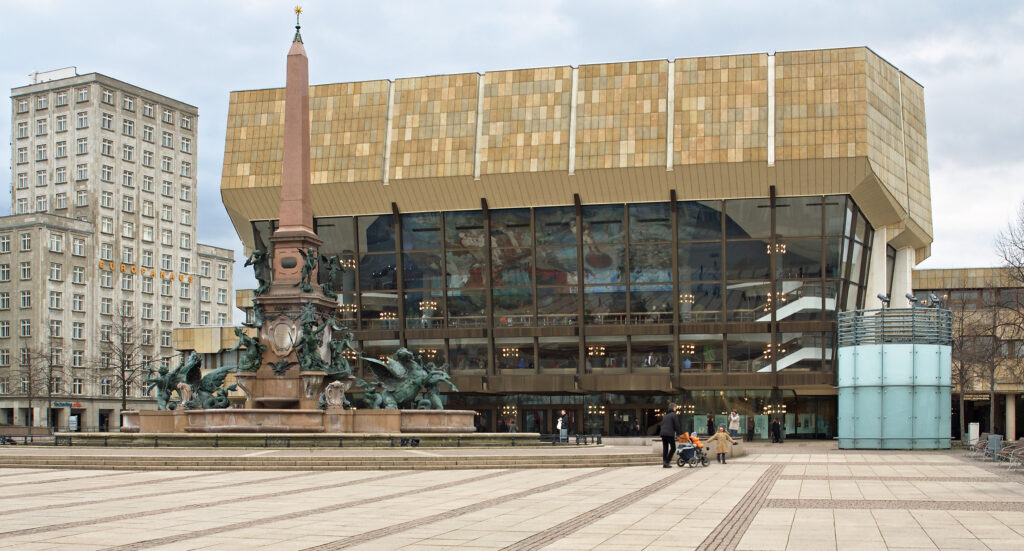
Gewandhaus, Leipzig, Saxony. On the initiative of Kurt Masur, then music director of the Gewandhaus, the Gewandhaus became a hub for civil society and peaceful dialogue. On October 9, 1989, immediately after the first mass demonstrations began in the GDR, the “Call of the Leipzig Six”—which Masur helped draft—called for the free exchange of ideas, peaceful dialogue, and restraint. Broadcast on radio and the city’s public address system, the appeal played a decisive role in ensuring that the pivotal demonstration—attended by 70,000 people—proceeded peacefully despite the tense atmosphere, and that the feared police and military intervention did not materialize. On October 22, the Gewandhaus opened its doors for the first “Conversation at Karl-Marx-Platz”: a series of roundtable discussions that became a forum for free social discourse and attracted enormous crowds.
Clemensplatz, Koblenz, Rhineland-Palatinate. At the 1931 Federal Constitution Day celebration in Koblenz, 60,000 people stood up for freedom and democracy. Since 1924, the Reichsbanner Schwarz-Rot-Gold, Association of Republican War Veterans, had organized such annual celebrations to mark the anniversary of the Weimar Constitution of August 11, 1919. Although the day had been commemorated with official ceremonies in the Reichstag since 1921, a parliamentary majority was never achieved to establish it as a legal holiday. The central goal of this democratic mass organization was to strengthen the still-young Weimar Republic and protect it from extremism. In 1933, the Reichsbanner was banned, and its members were persecuted, imprisoned, or forced into exile.
Market Square, Lingen, Lower Saxony. On August 22, 1954, more than 50,000 people from the Emsland region protested against Lower Saxony’s school legislation. The legislation called for the introduction of community schools, in which children of different religious denominations were to be taught together. In this predominantly Catholic region, this met with vehement opposition. The protesters saw this as an attack on their religious values and demanded the preservation of the Christian school tradition. The protest was supported by a broad coalition of parents’ associations, Catholic teachers’ associations, the CDU, and the Catholic Church. Among the demonstrators were many women from conservative circles, who rarely participated in politics at that time. The demonstration thus served as an example of political participation.
Salzstraße, Münster, North Rhine-Westphalia. On April 29, 1972, the first publicly authorized demonstration by gay and lesbian people in the Federal Republic of Germany took place in Münster, organized by the Münster Homophile Student Group (HSM). About 200 people took part in the protest march, which drew attention to the discrimination and criminalization of homosexual people. The demonstration was one of the first actions to take the step from self-help to the public sphere and to demand the rights of gay and lesbian people in public spaces. Attempts to increase public visibility for gay and lesbian people were frequently banned by the courts, for example in Aachen in 1973, in Ingolstadt in 1980, and in Ulm in 1981. Through the demonstration and accompanying event, the HSM sought to help eliminate social and occupational discrimination.
Boehringer Chemical Works, Hamburg. In 1981, the environmental organization Greenpeace occupied the chimney of the Boehringer Chemical Works. This nonviolent and media-effective form of protest, which Greenpeace used to draw attention to environmental issues, garnered international attention and thereby exerted pressure on politicians and the business community. While Greenpeace primarily fought against industrial pollution and nuclear power in the 1980s, the issues and forms of action within environmental movements have since evolved. Contemporary movements such as Fridays for Future rely on mass demonstrations, global networking, and digital campaigns to draw attention to the climate crisis. Despite their different methods, both movements are united by the goal of holding governments and the business sector accountable and bringing about sustainable change.
Bildquellen
- Kegelbahn im frühen 20. Jahrhundert.: Guggenheimer, J. (1885–1943), CC BY 4.0
- 100 Jahre Freiwillige Feuerwehr Obertiefenbach: Nassauer27, CC0
- Brandts Kapelle: Käthe und Bernd Limburg, www.limburg-bernd.de, CC BY-SA 3.0 DE
- Elisabeth Knipping Schule: Bestand AddF, Kassel, gemeinfrei
- Haus Burggarten: Angelika Kroll-Marth, CC BY-SA 4.0
- Wallonisch-Niederländische Kirche: Tilman2007, CC BY-SA 4.0
- Gewandhaus Leipzig: Appaloosaderivative work: Alupus, CC BY-SA 3.0