
A Short German History of the Declaration of Independence
Die deutsche Fassung finden Sie hier.
17th Century
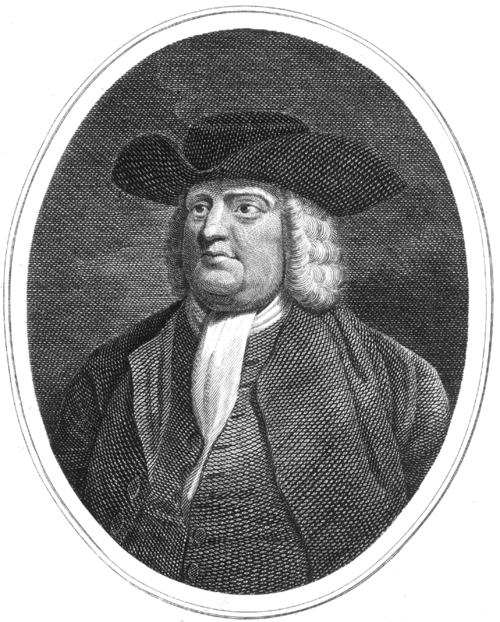
German settlers are documented to have lived in the present-day United States as early as 1562. The first permanent German settlement, Germantown, Pennsylvania, was established in 1683, a few miles north of Philadelphia. William Penn, who founded Pennsylvania in 1681 and Philadelphia in 1682, sold land to groups from Krefeld and Frankfurt (“Frankfurt Land Company”), administered by lawyer Francis Daniel Pastorius (Franz Daniel Pastorius). Thirteen Mennonite families from Krefeld, the “Original 13,“ crossed the Atlantic on board of the Concord and were welcomed by Pastorius upon their arrival on October 6, 1683, on the shores of the Delaware River in Philadelphia, where Penn had allocated land for his Holy Experiment.
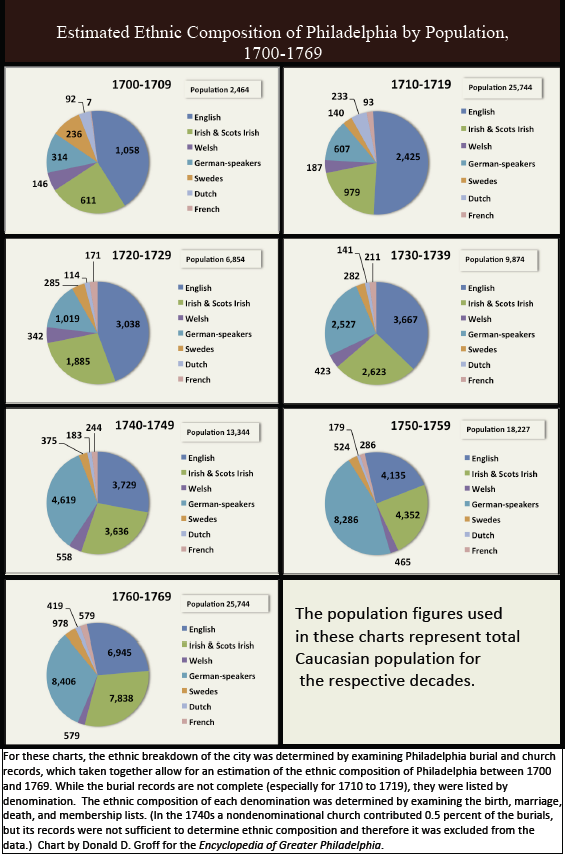
The total population of the German settlement in Pennsylvania grew rapidly, reaching an estimated 75,000 to 100,000 German-speaking settlers before the American Revolutionary War (1775-83). The demographic development in Philadelphia serves as a striking example of this trend.

18th Century

Printing played a crucial role in the development of Germantown, PA almost from the beginning. Early American pioneers in printing, Andrew Bradford and Benjamin Franklin, produced a variety of German language printing products, but only achieved moderate success. In 1734 Johann Christoph Sauer (Christopher Sower), son of a reformist preacher from Ladenburg am Neckar, settled in Germantown and established a German letterpress workshop with printing typefaces from the Egenolff-Lutherschen Schriftgießerei (foundry) from Frankfurt/Main. It was the first time in the colonies that Fraktur was used in printing. Sower achieved immediate success, as German readers were already familiar with this style of print.
Sower expanded his publishing efforts to include German-language newspapers and almanacs. His most notable achievement came in 1743 with the publication of the “Germantown Bible,” the first complete German-language Bible printed in colonial America. One examplar of this Bible has been acquired by the Historical Museum Frankfurt in 2016. His son continued his business, whilst a new competitor in the German-language printing sector arose. Henrich Miller (Heinrich Möller) published Der Wöchentliche Philadelphische Staatsbote from 1762 onwards—later known as Henrich Millers Pennsylvanischer Staatsbote—along with other political publications. In early 1776, the new German printing office run by Melchior Steiner and Charles Jacob Sigismund Thiel (Carl Cist) gained attention by publishing Thomas Paine’s revolutionary pamphlet Common Sense in German (“Gesunde Vernunft”) and, increasingly, government records in German.
Revolutionary Years around 1776
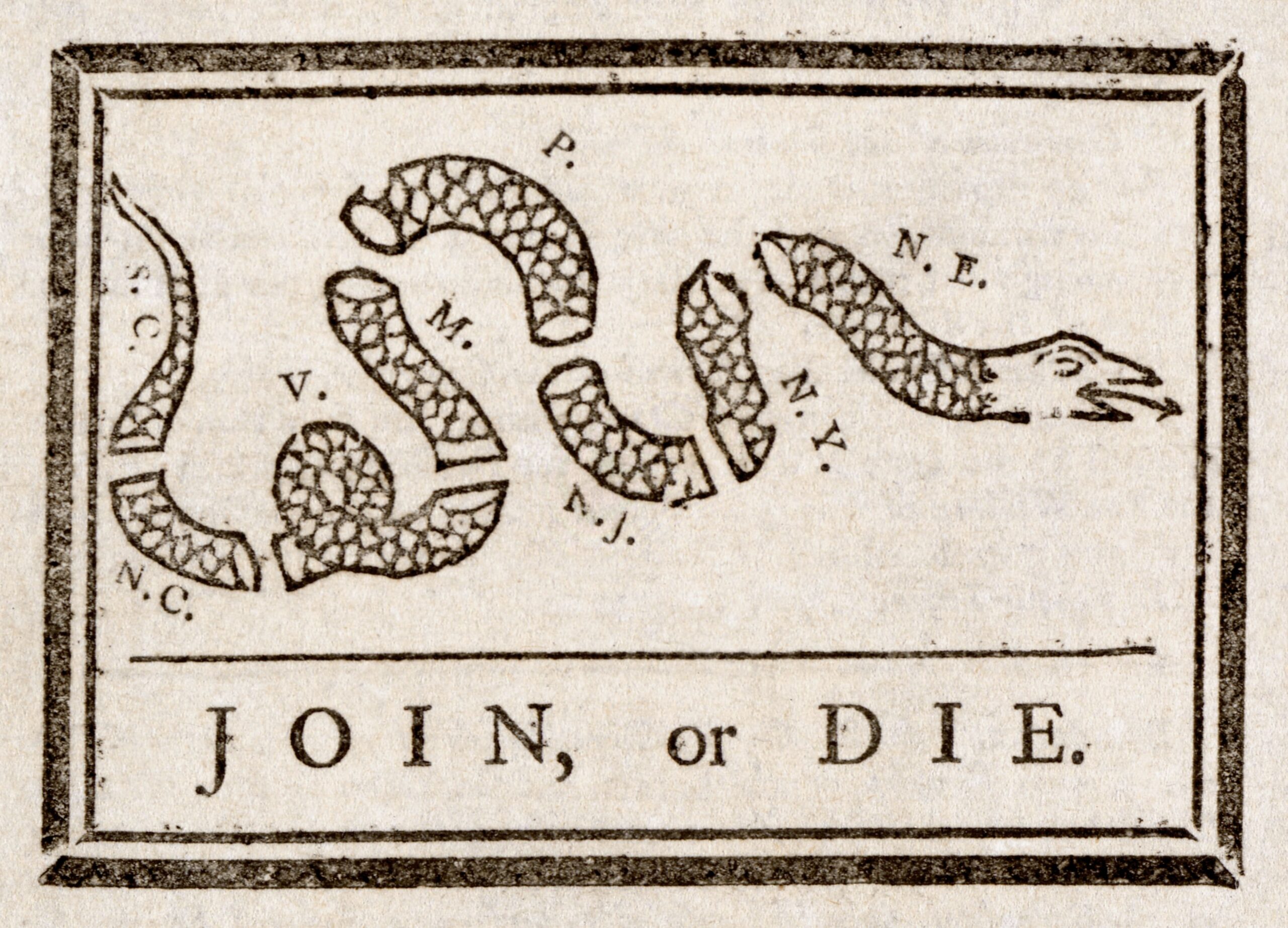
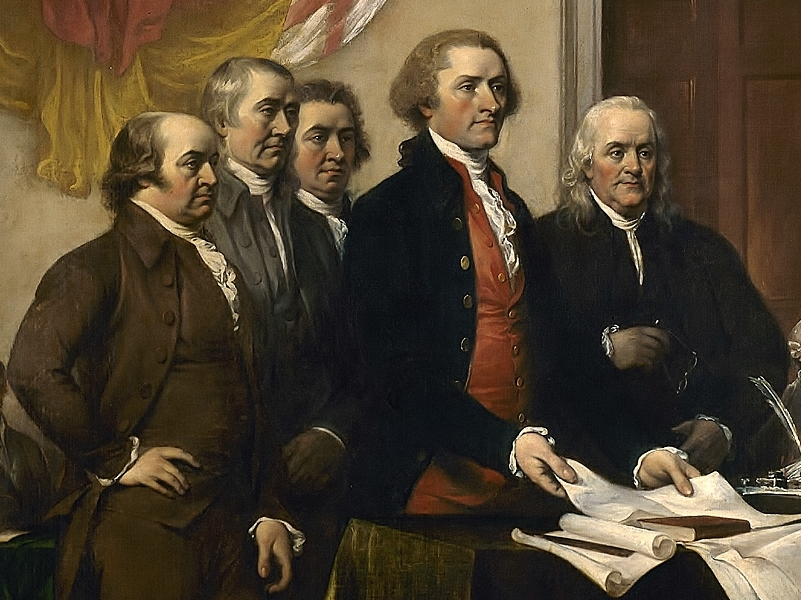
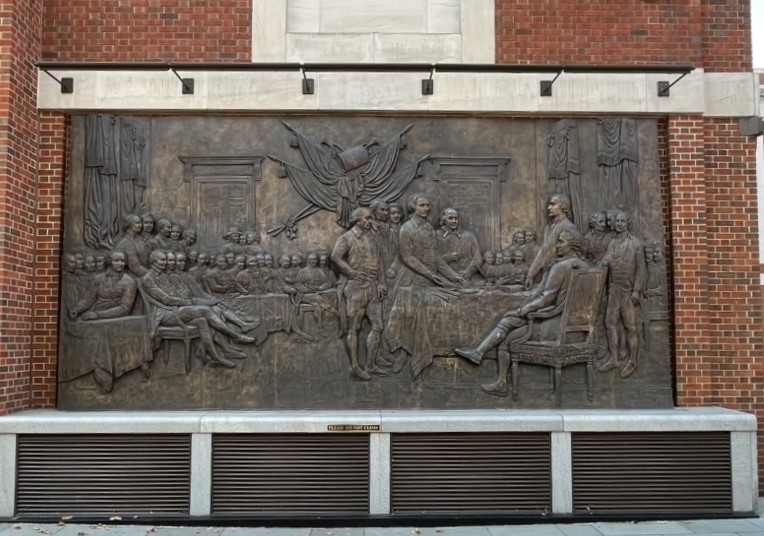
The time of the revolution began no later than 1763, when Great Britain introduced a series of fiscal and administrative reforms in its British North American colonies. Representatives of the first twelve colonies convened a Continental Congress in Philadelphia to coordinate a common response to the British policies. The crisis and discontent with British colonial rule intensified with the beginning of the American Revolutionary War in 1775. Delegates of the colonies thus met again in Philadelphia for a Second Continental Congress. A new solution emerged: separation from Great Britain and the founding of a confederation. On May 15, Congress voted to create state constitutions in each former colony and to suppress all forms of Crown authority. On June 7, Richard Henry Lee introduced for the delegation of Virginia the formal motion to break with Great Britain. Shortly afterwards, on June 11, Congress appointed the “Committee of Five”, John Adams of Massachusetts, Benjamin Franklin of Pennsylvania, Thomas Jefferson of Virginia, Robert R. Livingston of New York, and Roger Sherman of Connecticut, to draft a declaration for independence. Jefferson, who was known for his penmanship, became the principal author of the draft, which he then shared and discussed with the other members. No documentation of the drafting process exists. The origins of the draft are only recorded through the memoirs and letters that Jefferson and Adams wrote years later, although their accounts are not consistent. The delegates of the Continental Congress convened on July 3 and 4 to discuss the draft and eventually edited the paper and cut roughly 500 words. The final version was 1,337 words long, including its title. On July 4, 1776 the delegates of twelve of the thirteen colonies—now states—ratified a declaration, which would later become known as the Declaration of Independence.

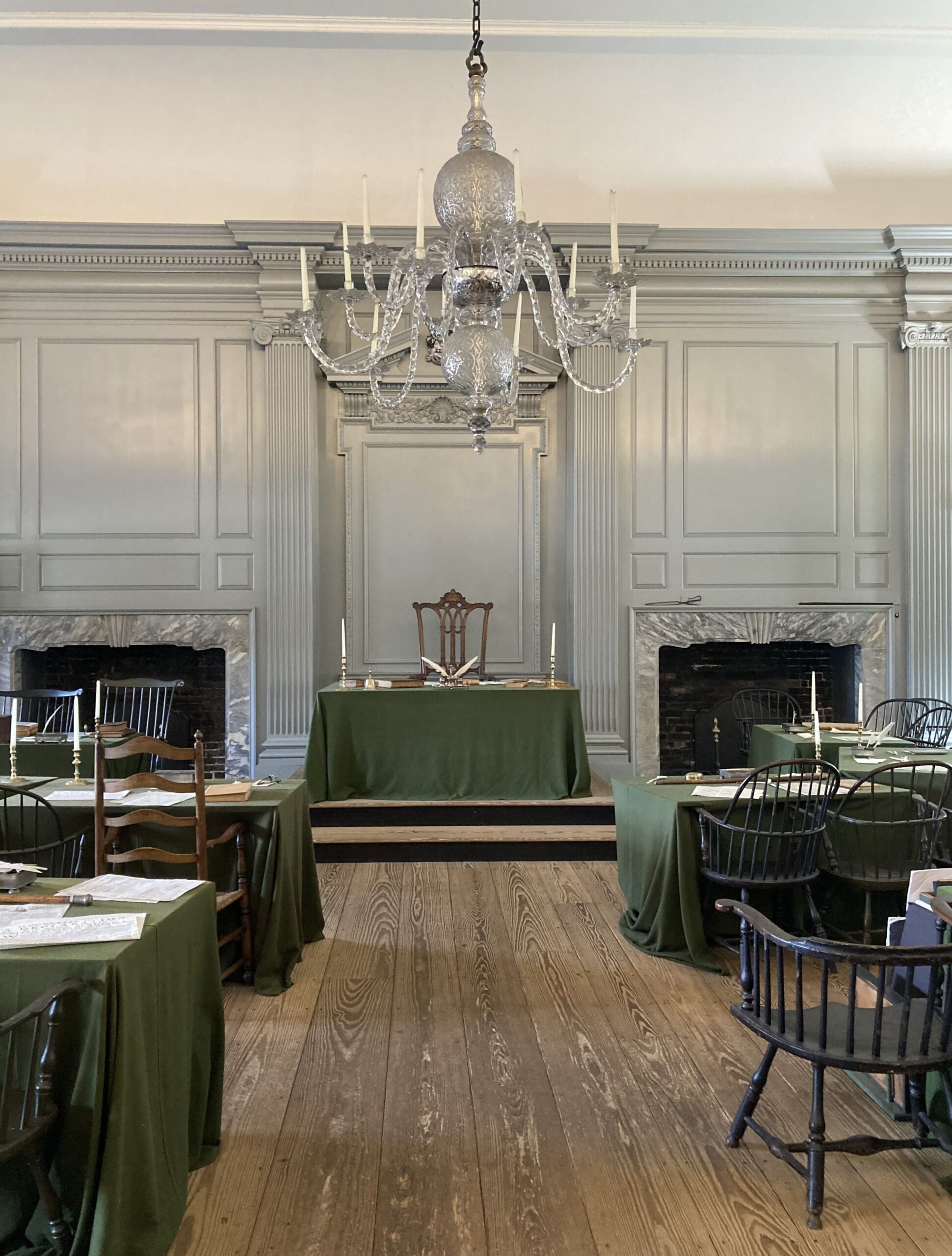
The Printing of the Declaration
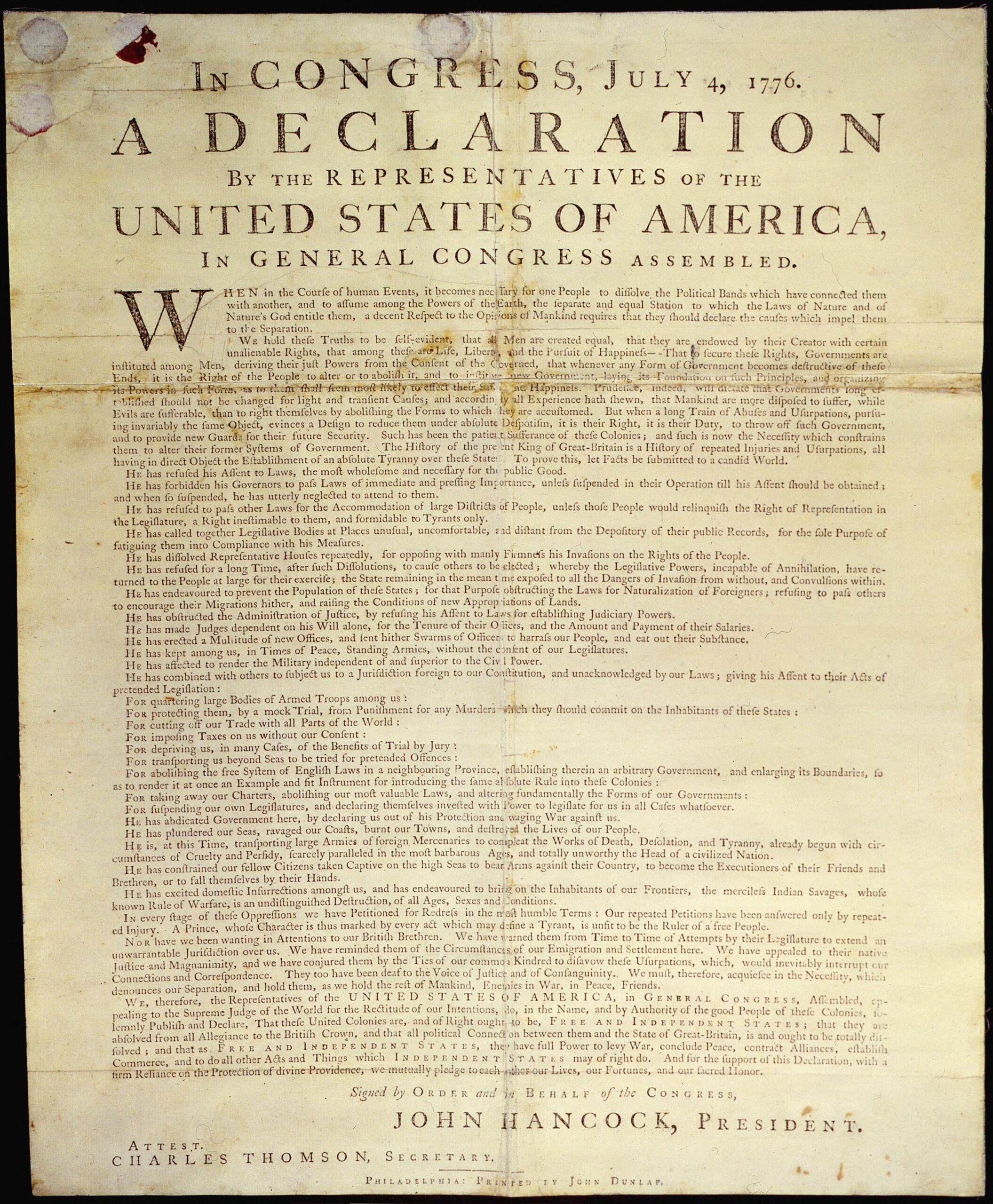
John Dunlap produced the first print of the Declaration on July 4, 1776. His pamphlet was sent to governors, assemblies, and influential private persons in the newly founded states to spread the news of independence and to foster unity. On July 6, Benjamin Towne published the first newspaper version of the Declaration in his The Pennsylvania Evening Post. On the morning of July 8, John Dunlap announced its proclamation in his Pennsylvania Packet.
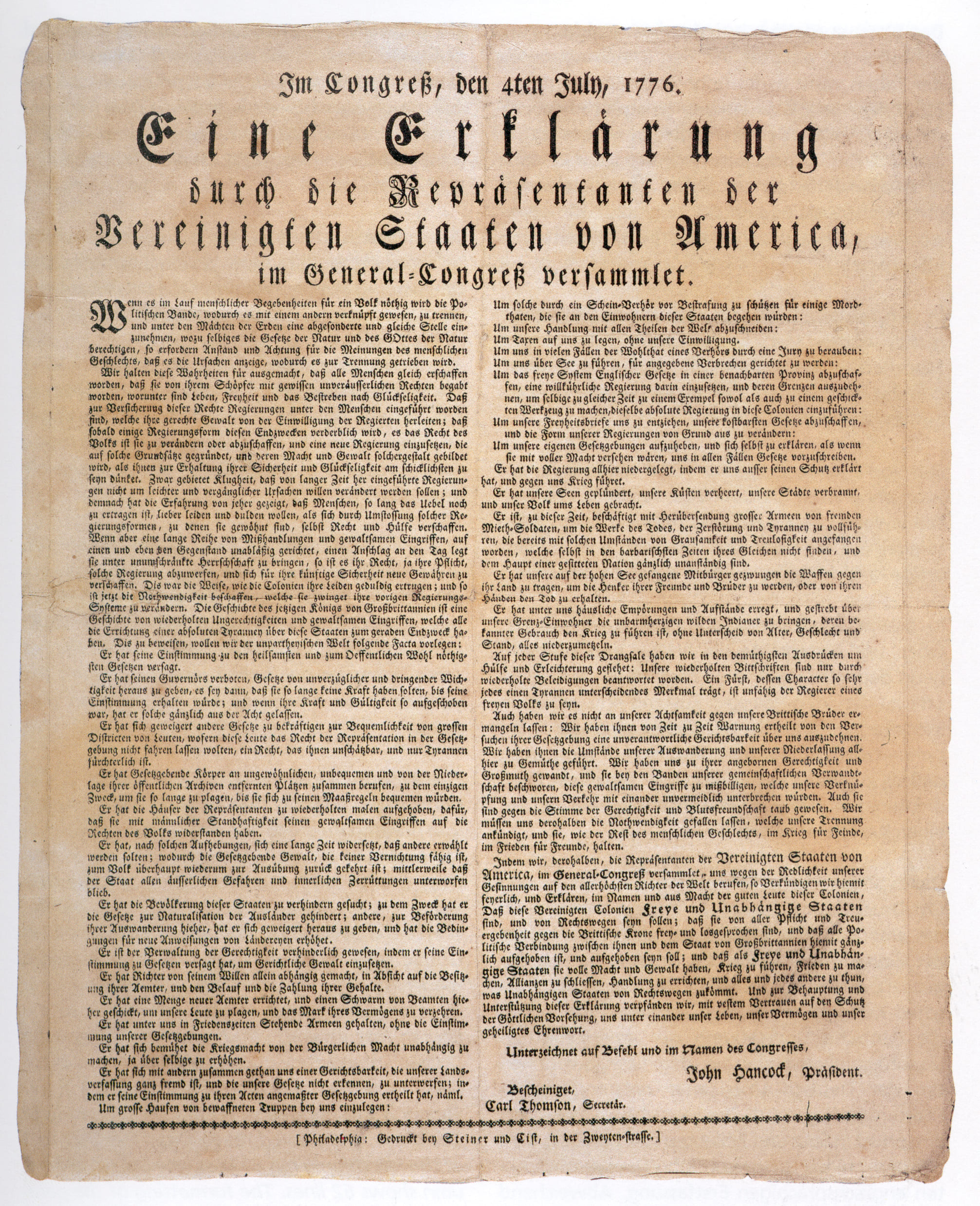
As early as July 3, Christoph Sauer II disclosed the decisive resolution of Congress to declare independence in his Germantowner Zeitung. On July 5, Henrich Miller announced in his Pennsylvanischer Staatsbote that the Declaration of Independence had been passed and was currently being printed. Steiner and Cist likely published their German translation of the Declaration in Fraktur as a broadside on July 8 (see fig. 8). Few of these broadsides survived. To the best of our knowledge, only two copies remain today: one in the Gettysburg College Library and the other in the collection of the German Historical Museum in Berlin. The copy of the Gettysburg College is on loan and currently on display as part of the special exhibition „The Declaration’s Journey“ at the Museum of the American Revolution in Philadelphia, PA until January 3, 2027. The German Historical Museum’s copy is part of ist exihibition „Objects. History. Stories.“ until the beginning of August 2026.
On July 9, another German translation of the Declaration was published on the front page of Henrich Millers Pennsylvanischer Staatsbote. These translations informed the German-speaking population of Pennsylvania, which made up a third of the state’s overall population at the time. The forms in which the Declaration was printed or reproduced, varied in their format, spelling, font size and punctuation. No official guideline on how to publish the text or its structure exists. In the following weeks, broadsides were distributed for proclamations in many townships and for George Washington’s troops. There is no record about public readings of the German broadside. Nevertheless, the accuracy, expression and production speed of the German translations are impressive. The first non-English version of the Declaration existed merely within days after its passage in Congress. However, no official guidelines on how to publish and translate the text or its structure are known to exist.
During the summer of 1776, the Declaration was printed in newspapers in all thirteen former colonies, distributed as broadsides, read aloud, and shipped across the Atlantic. The first printed version of the Declaration reached Europe in August, arriving in London on August 16, where it was immediately excerpted, censored, and manipulated. Isaak Iselin from Basel was the first to provide a complete German translation of the Declaration in Europe in October 1776. The valuable and more accurate translations by Miller, Cist & Steiner did not resurface until 1987.
19th Century
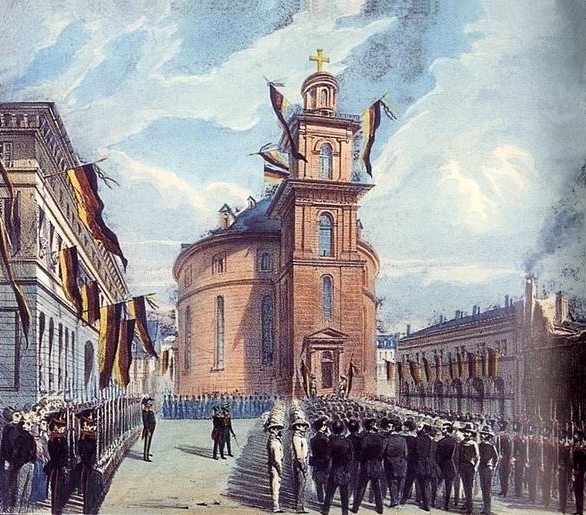
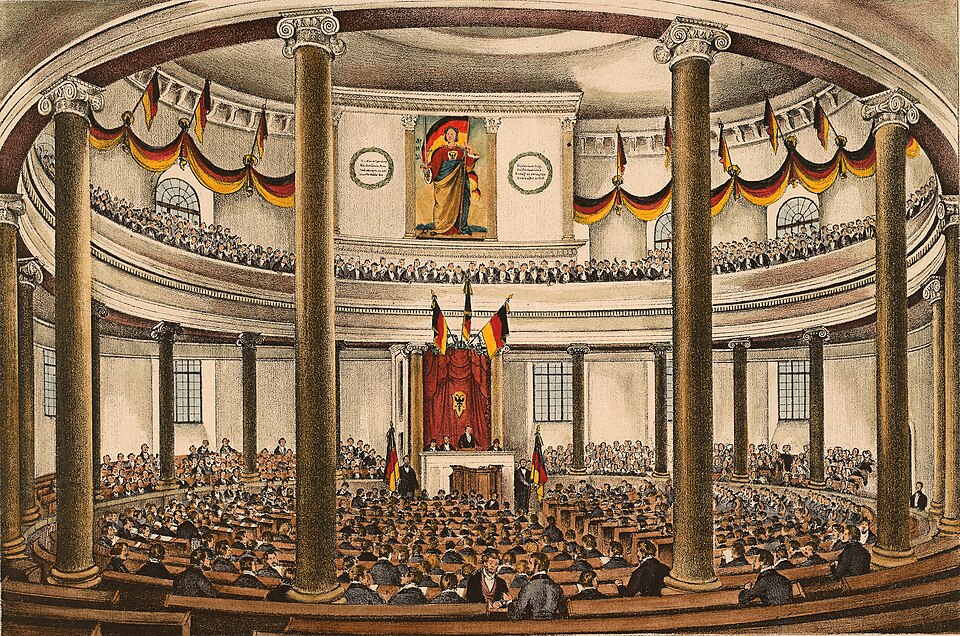
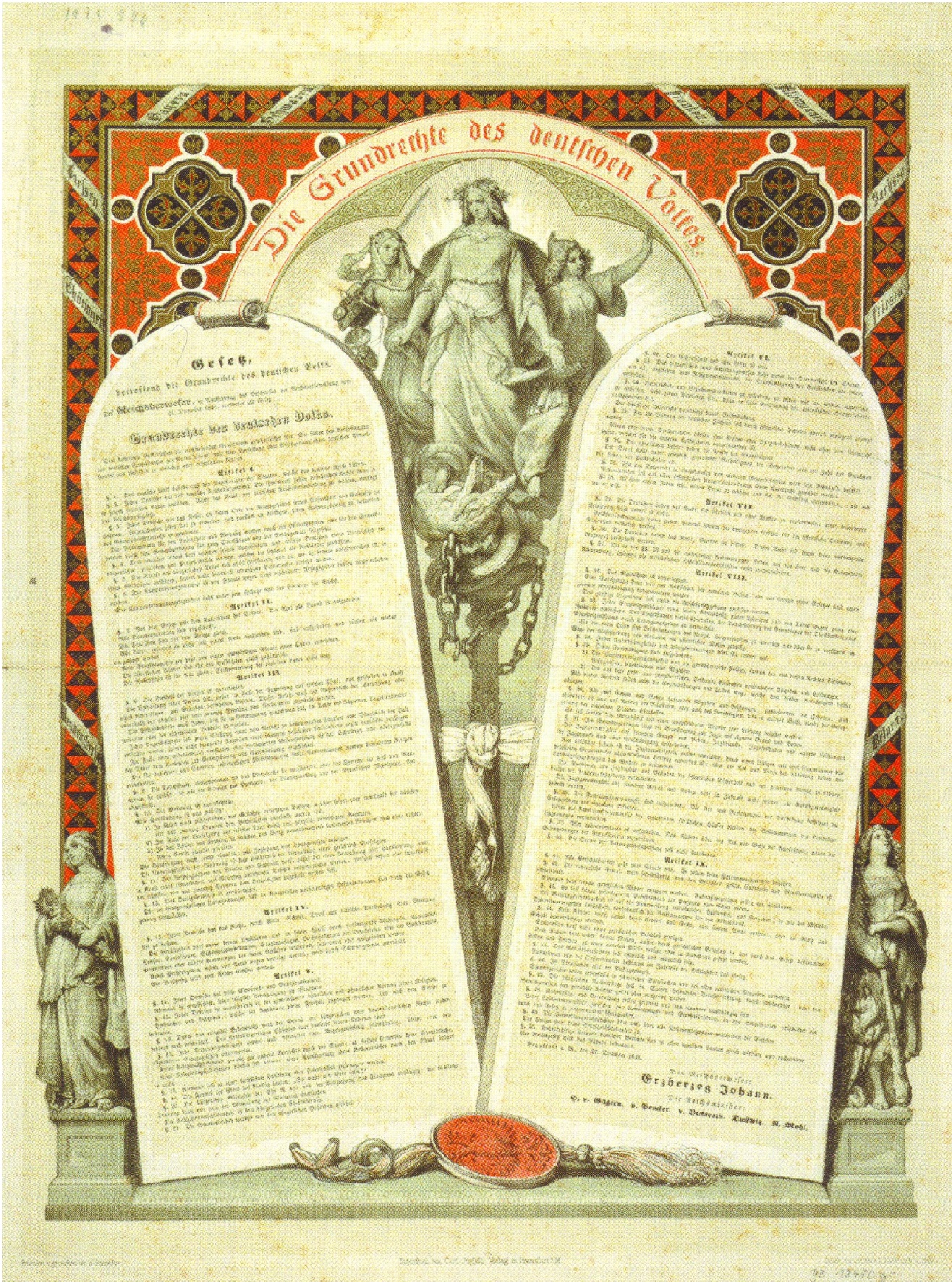
For several decades after its adoption, the Declaration of Independence had little impact on the territories of present-day Germany. The delegates of the Frankfurt National Assembly of 1848/49 focused primarily on the U.S. Constitution of 1787. They used the Constitution as one inspiration to structure a loose confederation of German states and to draft a liberal constitution. The Declaration of Independence is often included, but not cited, as a text in the anthologies of state constitutions. Even in the U.S., the text of the Declaration only regained wide public attention upon its 50th anniversary.
20th Century
German appreciation for U.S. constitutionalism grew during the 20th century, including the ideals embodied in the Declaration of Independence. In the 1930s, politician and legal scholar Hermann von Mangoldt contributed significantly to the German understanding of the U.S. constitutional system in the 1930s, for which he also closely examined the Declaration. As a member of the Parliamentary Council, which drafted the German Grundgesetz (Basic Law) in 1948/49, he was also strongly influenced by the democratic ideals of the Declaration. A key example is Article 20 (4) (“Right to Resist“):
All Germans shall have the right to resist any person seeking to abolish this constitutional order if no other remedy is available.
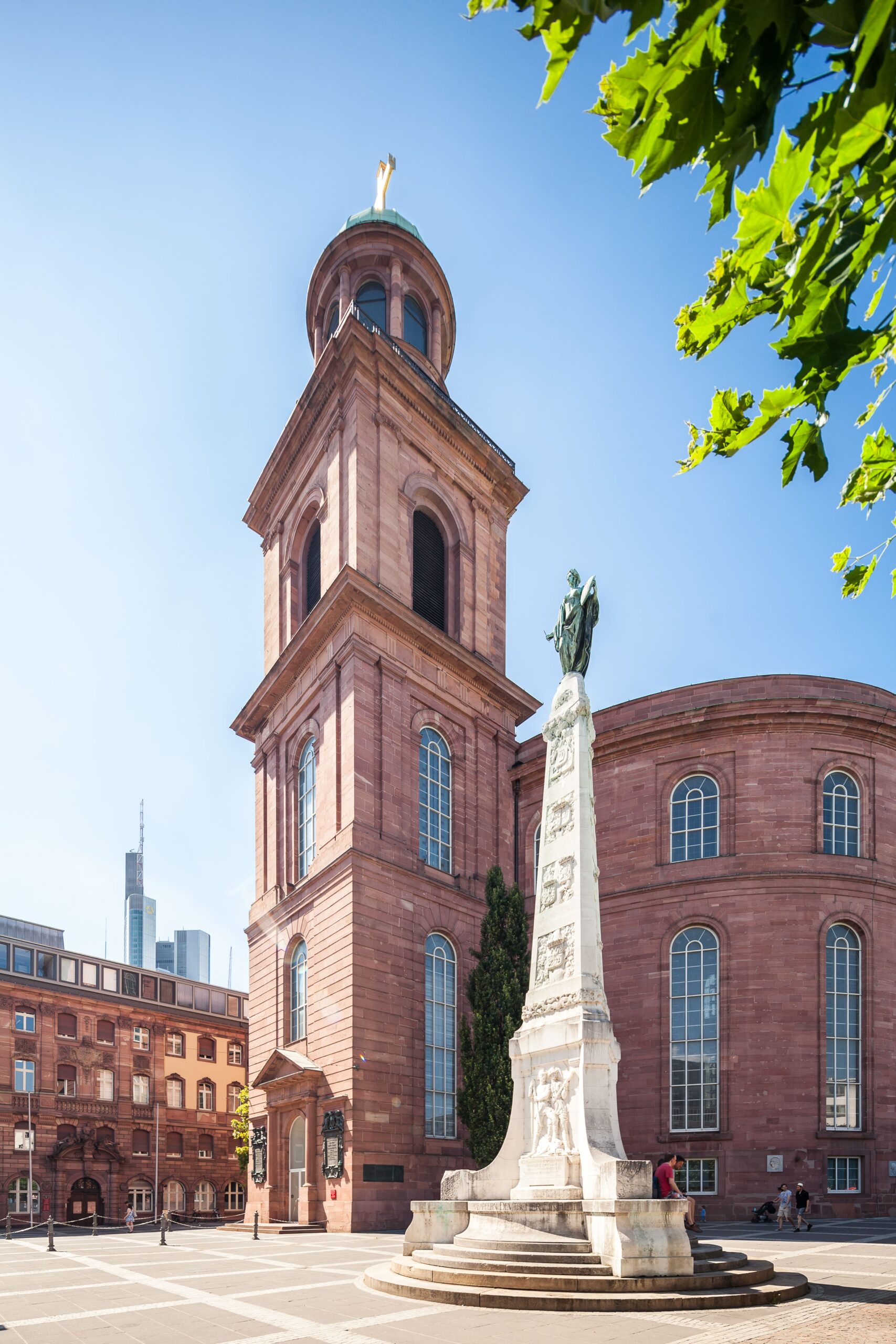
On May 15, 1976, the national ceremonial act to celebrate the 200th anniversary of the Declaration took place in St. Paul’s Church in Frankfurt/Main. German Chancellor Helmut Schmidt and Vice President of the United States of America Nelson A. Rockefeller were among the distinguished guests. In his speech, Vice President Rockefeller thanked the German population for their strong participation in the festivities and called for a renewed commitment to the principles of freedom, democracy, and human rights. Various German and U.S. media outlets reported on the festivities, including The New York Times on its front page.


21st Century
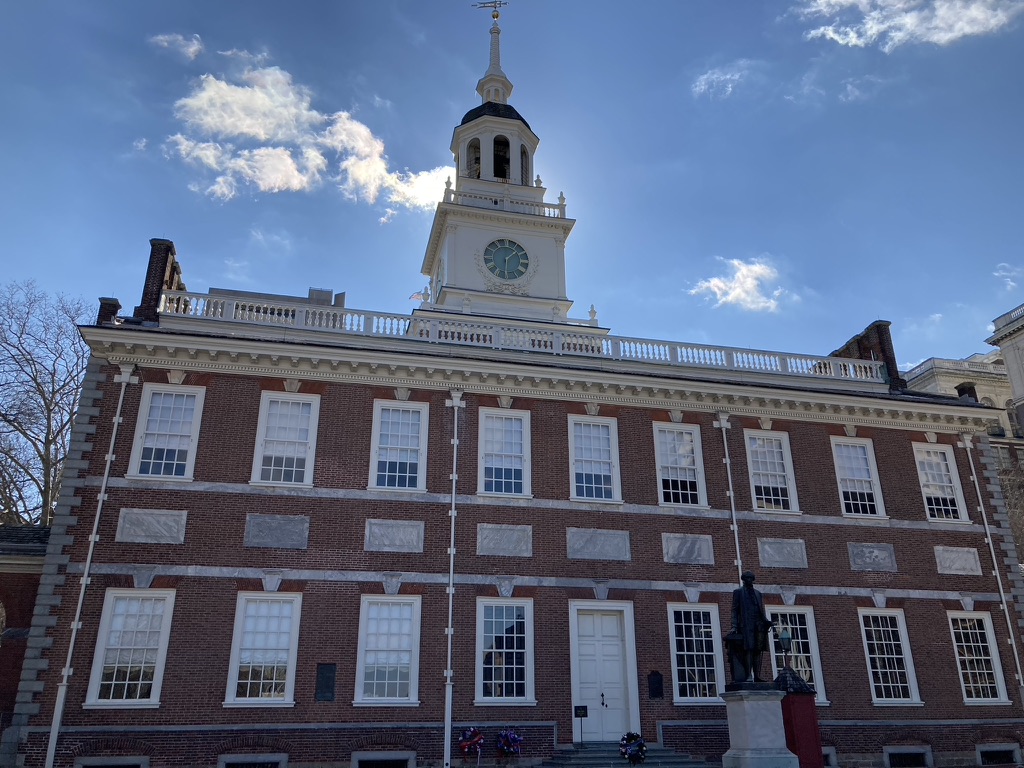
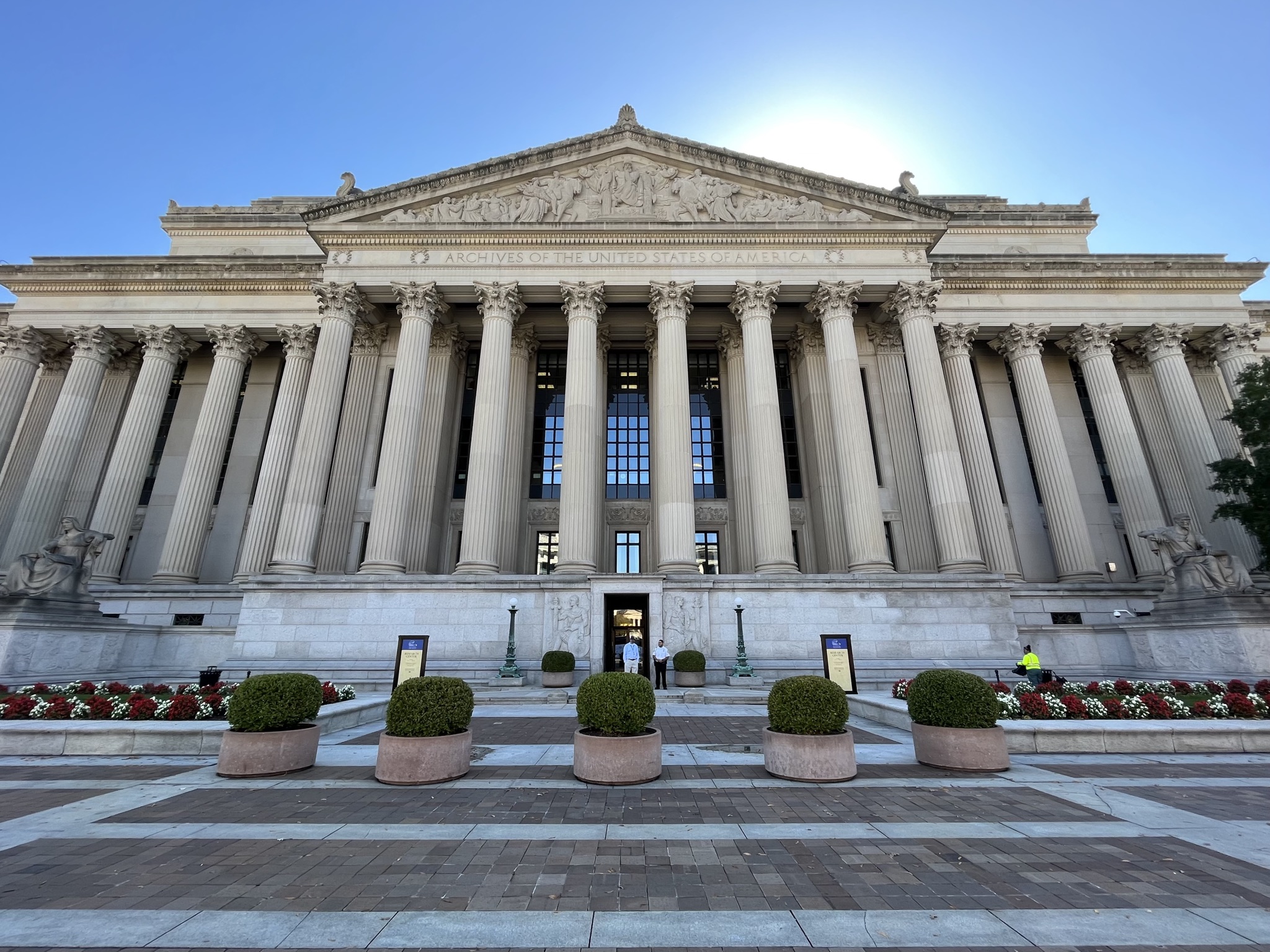
While the ideas of the U.S. Declaration of Independence spread throughout the world, the document itself embarked on a remarkable journey. Signed by delegates from all thirteen states during the summer of 1776, the Declaration traveled with the Continental Congress through Pennsylvania, Maryland, New Jersey, and New York over the next decade. The Declaration of Independence was later entrusted to the U.S. Secretary of State, first in Philadelphia and later in Washington, D.C. During times of war, the Declaration was evacuated for safekeeping. Starting in the 1920s, it was placed in the care of the Library of Congress. Then in 1952, the Declaration was transferred under tight security to the National Archives, where it is still preserved and on display to the public ever since.
The U.S. Declaration of Independence is one of the most influential documents of the modern era and marked the beginning of the liberal constitutional tradition of the Atlantic world. Moreover, the Declaration represents the many Germans who have contributed to the founding and development of the United States of America. 250 years later, in 2026, we commemorate this landmark declaration, which first enshrined unalienable rights to life, liberty, and the pursuit of happiness.
Sources
Institut für Stadtgeschichte Frankfurt Best. V113 Nr. 544.
„The Declaration of Independence“, National Archives, accessed June 15, 2026.
Selected further reading
Goetsch, P. & Hurm, G. (1992). The Fourth of July : Political Oratory and Literary Reactions, 1776-1876. Tübingen: Narr.
Isaacson, W. (2025). The greatest sentence ever written. New York: Simon and Schuster.
Lepore, J. (2018). These Truths: A History of the United States. New York: W. W. Norton & Company
„The Declaration“, National Constitution Center.
A joint project of

Bildquellen
- Abb. 1: Gemeinfrei
- Abb. 2: Gemeinfrei
- Abb. 3: Christopher Sauer, Public domain
- Abb. 4: Benjamin Franklin, Gemeinfrei
- Abb. 5: Charles Édouard Armand-Dumaresq, Gemeinfrei
- Abb. 6: John Trumbull, Gemeinfrei
- Abb. 7: © Stiftung Orte der deutschen Demokratiegeschichte
- Abb. 8: Deutsches Historisches Museum Berlin, Gemeinfrei
- Abb. 9: The U.S. National Archives, Gemeinfrei
- Abb. 10: Jean Ventadour (1822-1880), Gemeinfrei
- Abb. 11: Gemeinfrei
- Abb. 12: Ws-KuLa, CC BY-SA 3.0
- Abb. 13: © Stiftung Orte der deutschen Demokratiegeschichte, Foto: Telesniuk
- Abb. 14: Fotograf Hans Schafgans, 1977, CC BY-SA 2.0
- Abb. 15: White House, Gemeinfrei
- Abb. 16: © Stiftung Orte der deutschen Demokratiegeschichte
- Abb. 17: © Stiftung Orte der deutschen Demokratiegeschichte
- Abb. 18: © Stiftung Orte der deutschen Demokratiegeschichte
- Titelbild des Eintrags – Dunlap Broadside: The U.S. National Archives, Gemeinfrei
One thought on “A Short German History of the Declaration of Independence”
Comments are closed.