
Open-Air-Exhibition: „Constitutions—A Framework for Your Freedom“
A constitution is more than just a document. It forms the legal framework within which political processes and social coexistence take place. Every political society needs rules to safeguard its fundamental values and guide decision-making processes. However, a constitution alone does not necessarily mean democracy. In democracies, the constitution is the foundation that ensures the equality of all citizens and guarantees their rights.
How is a constitution created?
Constitutions never emerge in a vacuum. They build upon a society’s cultural, economic, geographic, and political traditions. Every constitution is influenced by earlier legal and political systems—whether by adopting them or consciously rejecting them. In Germany, the history of the constitution dates back to the Middle Ages. In the early modern period, the first proto-constitutional structures took shape in the Holy Roman Empire. Constitutionalism gained prominence in the 19th century: constitutions were drafted, amended, or rejected amid the struggle between monarchist and liberal forces—always reflecting the prevailing social spirit and the balance of political power. After all, a democratic constitution derives its legitimacy from the acceptance and trust of the people. These constitutional sites illustrate how the democratic constitutional ideal has evolved in Germany. Whether carved in stone, wood, or concrete—each of these sites tells the story of the challenges, successes, and opposition encountered on the path to German constitutional democracy, and serves as a reminder that the value of a constitution lies not only in its provisions, but in how it is lived out and defended.
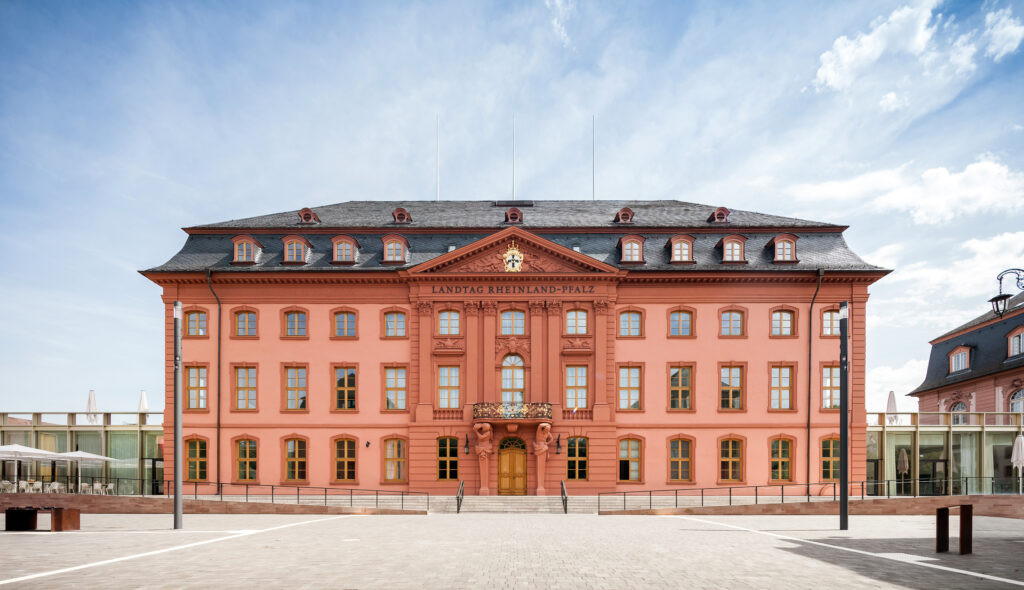
Deutschhaus, Mainz, Rhineland-Palatinate. During the revolutionary years of 1792–93, the Deutschhaus in Mainz became a pivotal site in the history of democracy. It was here that Germany’s first freely elected parliament, the Rhenish-German National Convention of the Republic of Mainz, convened. The Convention articulated the desire for a democratic constitution and a united Germany. Due to the parliament’s short lifespan, it was not possible to follow up the demand for popular sovereignty with a constitution. Nevertheless, these demands mark an important episode in German constitutional history. Today, the Deutschhaus is the seat of the Rhineland-Palatinate state parliament.
The Deutschhaus in Mainz is characterized by its red sandstone. The main portal is crowned by a black-and-gold Baroque balcony resting on the shoulders of two Atlas figures.
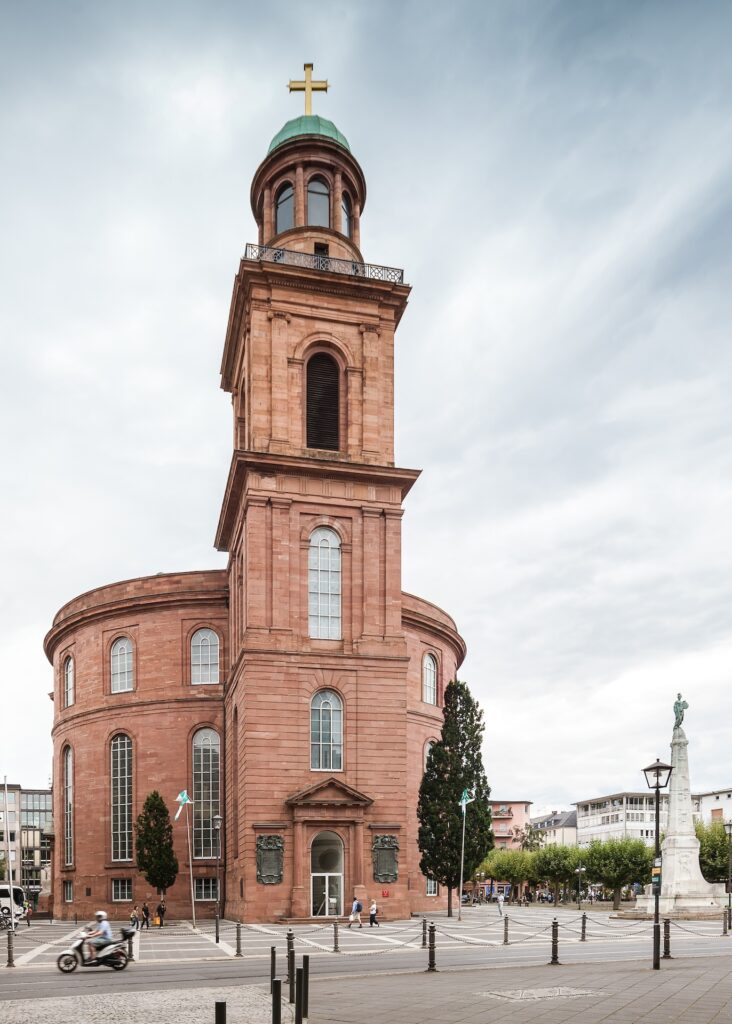
St. Paul’s Church, Frankfurt am Main, Hesse. St. Paul’s Church is a symbol of the democratic aspirations of the 19th century. It was here that the first pan-German National Assembly convened in 1848. It drafted a groundbreaking constitution intended to guarantee unity and freedom for the German states and fundamental rights for citizens. However, the Prussian King Frederick William IV rejected it, and the constitution could not be implemented. Nevertheless, the St. Paul’s Church Constitution was an important step toward democracy in Germany and a model for later constitutions.
In the revolutionary year of 1848, the church boasted the largest and most modern hall in the city and was therefore an ideal venue for the National Assembly. To ensure that sessions could be held even during the winter months, the church was even equipped with state-of-the-art underfloor heating at the turn of the year 1848–49. The church, which was completely bombed and burned down in 1944, was rebuilt beginning in 1947–48. While its exterior remains almost unchanged, the original interior is now barely recognizable. In place of the former nave with its galleries, a low colonnaded hall was created, with a deliberately simple hall above it.
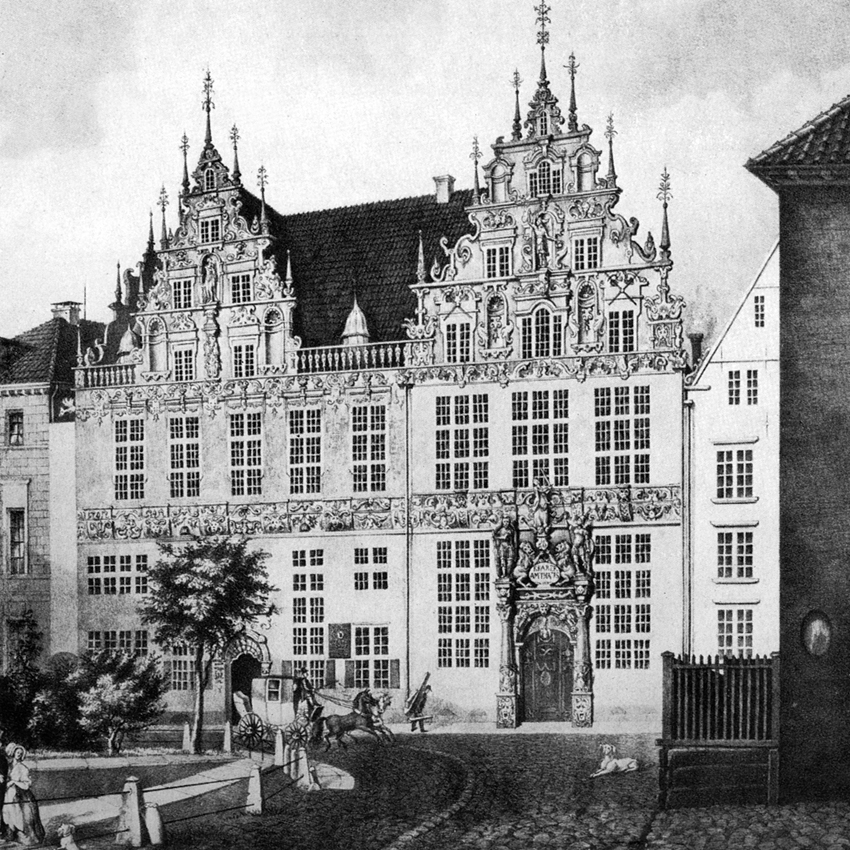
Krameramtshaus, Bremen. In March 1848, a citizens’ assembly held at what is now the headquarters of the Chamber of Crafts adopted a petition addressed to the Bremen Senate. They succeeded in having their demands for universal and equal suffrage and the establishment of a constituent assembly met, thereby ushering in a peaceful upheaval in the balance of power in the Hanseatic city.
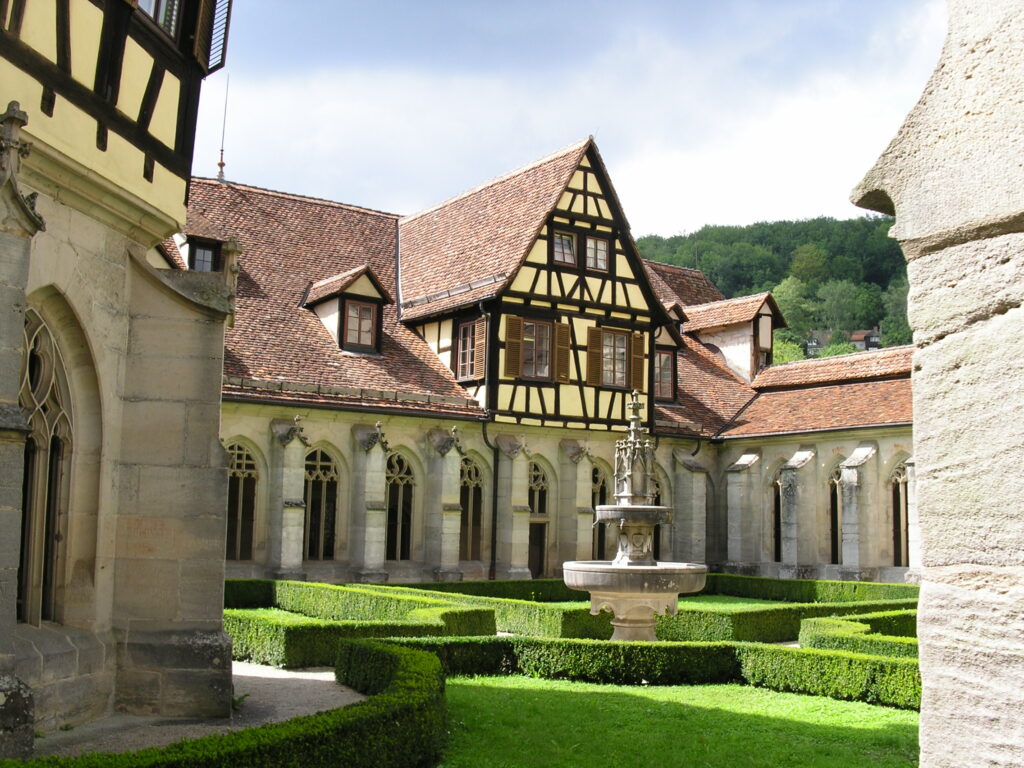
Bebenhausen Monastery, Tübingen, Baden-Württemberg. The State Parliament of Württemberg-Hohenzollern was the first freely elected parliament in Germany after World War II. Located in the French occupation zone, the State Parliament and the state constitution were established at Bebenhausen Monastery. The state existed until 1952. The state constitutions adopted after World War II express, within a constitutional framework, the cultural and political differences among the federal states of modern Germany.
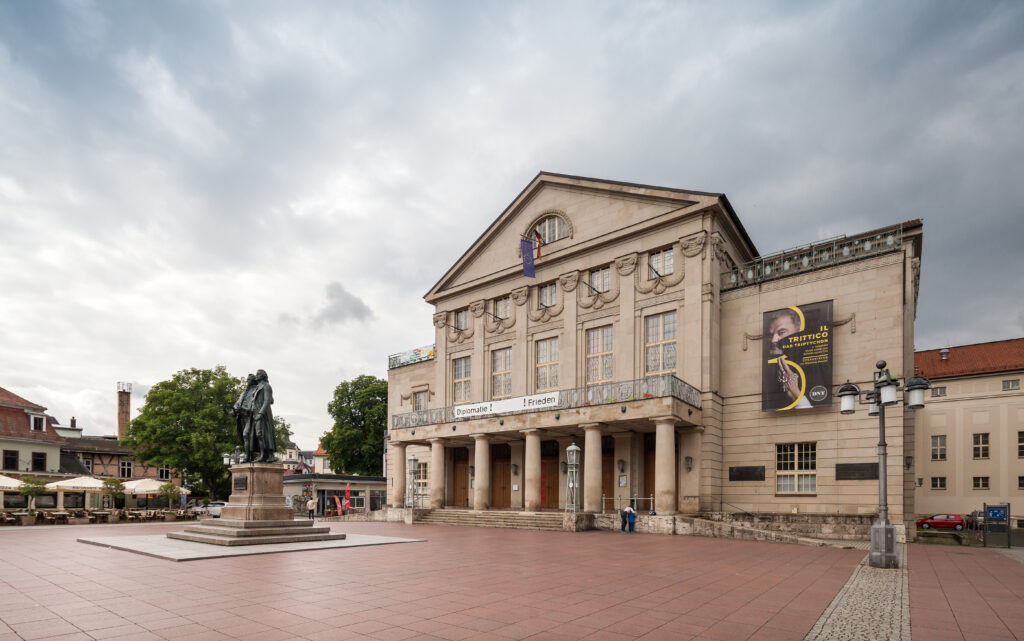
German National Theater, Weimar, Thuringia. After the end of World War I, the National Assembly in Weimar established the first German republic in 1919. The assembly met in Weimar to avoid the political unrest in Berlin. Furthermore, as the hometown of Goethe and Schiller, the city stood for humanist and federalist traditions. The Weimar Constitution enshrined democratic principles such as the separation of powers and universal suffrage—including, for the first time, the right to vote for women. It raised hopes for a stable democracy, but soon had to defend itself against attacks from both the right and the left. In the 1930s, extremist forces exploited the constitutional mechanisms to undermine and ultimately destroy democracy. The “Weimar Experiment” ended tragically, yet the constitution remains a milestone and a lesson in the challenges facing democratic systems.
The theater building, constructed in 1908, was renamed the “German National Theater Weimar” on the day of the National Assembly elections. The venue was used by various political movements: in 1924, the first pro-democratic constitutional celebration took place there, but a party convention of the NSDAP was also held there in 1926.
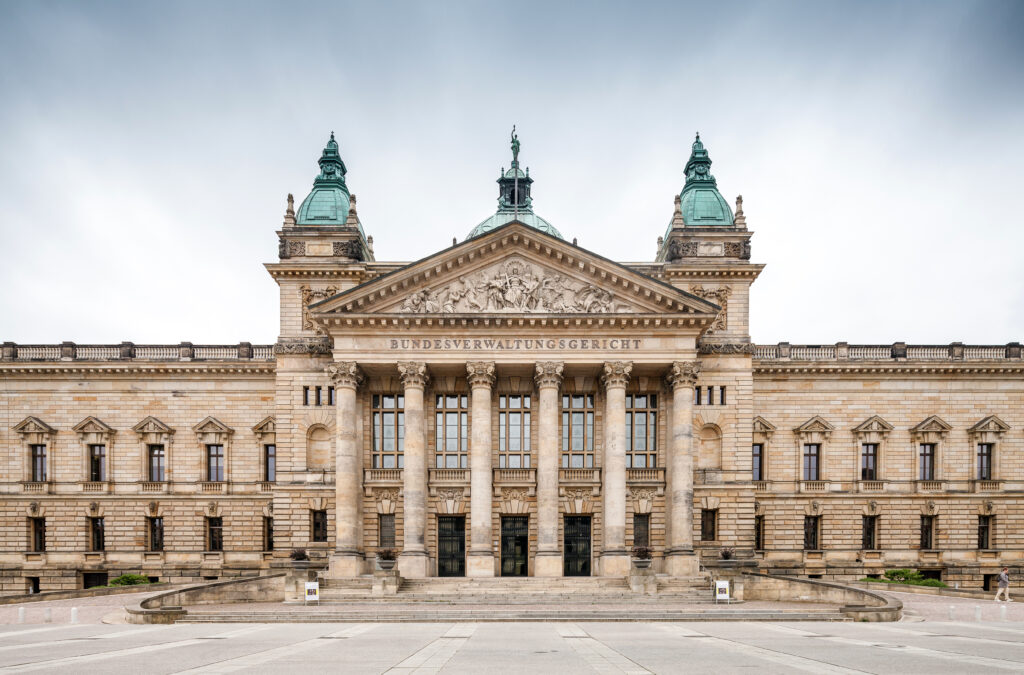
Reich Court, Leipzig, Saxony. The Reich Court in Leipzig, which today houses the Federal Administrative Court, was a central venue for constitutional justice in the Weimar Republic from 1921 to 1933. It was here that the “State Court for the Protection of the Republic” and the “State Court for the German Reich” ruled on political offenses and constitutional conflicts. The State Court for the Protection of the Republic was an attempt to defend the young democracy against attacks—a bold endeavor that, however, came to an end in 1927. The “State Court for the German Reich” is often regarded as the precursor to the Federal Constitutional Court.
Inside the building, which opened in 1895, a formal late-Renaissance style prevails, blending polished marble with light gray stone. Large stained-glass windows brighten the solemn atmosphere.
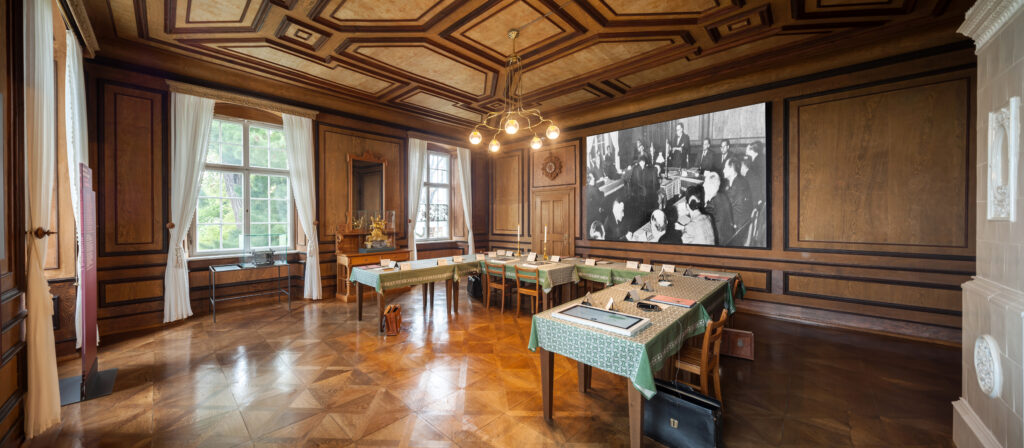
Augustinian Canons’ Abbey, Herrenchiemsee, Bavaria. After World War II, the Basic Law of 1949 laid the foundation for our democracy today. At Herrenchiemsee and in Bonn, the representatives of the states and the Parliamentary Council drafted a federal constitution that took into account both the lessons learned from the Weimar era and the experiences of the Allied occupying powers. The Basic Law guaranteed comprehensive fundamental rights and established a liberal, constitutional order. With its promulgation on May 23, 1949, it marked the beginning of a new democratic chapter in West Germany.
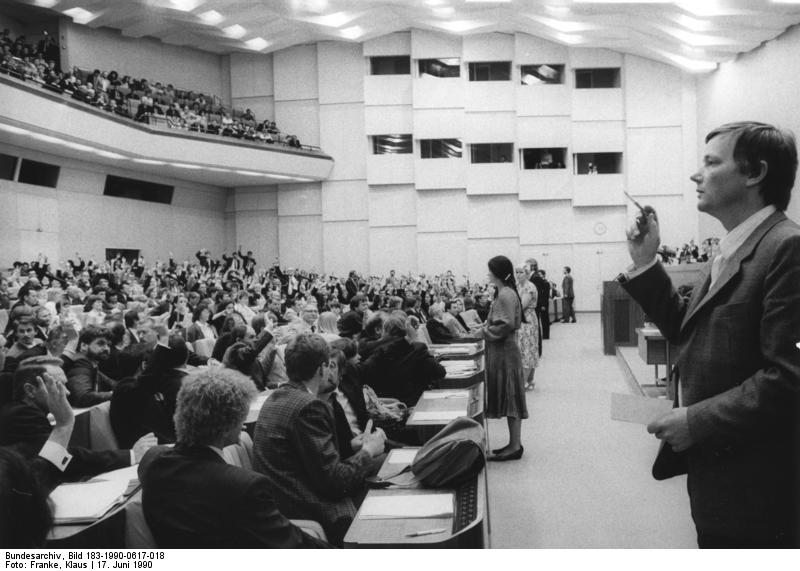
Palace of the Republic, Berlin. The Palace of the Republic, the former seat of the People’s Chamber of the GDR, did not become a landmark in the history of democracy until August 23, 1990: On that day, the People’s Chamber voted by a clear majority to have the GDR join the scope of application of the Basic Law of the Federal Republic of Germany. The decision marked the end of the GDR and symbolized the success of the Peaceful Revolution, which had given voice to the citizens’ desire for freedom and democracy. The reunification and the GDR’s accession to the Basic Law demonstrate how Germany’s democratic constitutional tradition ultimately made a unified, free constitutional state possible.
Bildquellen
- Krameramtshaus Bremen: Friedrich Wilhelm Kohl, Gemeinfrei
- Kloster Bebenhausen: Aida at cs.wikipedia, CC BY-SA 2.5
- Deutsches Nationaltheater Weimar: Stiftung Orte der deutschen Demokratiegeschichte
- Reichsgericht Leipzig: Stiftung Orte der deutschen Demokratiegeschichte, Foto: Alexander Telesniuk
- Augustinerchorherrenstift: Stiftung Orte der deutschen Demokratiegeschichte, Foto: Alexander Telesniuk
- Stimmauszählung bei der Abstimmung über den DSU-Geschäftsordnungsantrag, auf Punkt 1 der Tagesordnung einen Antrag zum Beitritt der DDR zur BRD nach Artikel 23 des Grundgesetzes „mit dem heutigen Tag“ zu setzen.: Bundesarchiv, Bild 183-1990-0617-018 / Franke, Klaus / CC-BY-SA 3.0, CC BY-SA 3.0 DE