
Open-Air-Exhibition: „You Can’t Form a State Without Women“
Equality is a core principle of modern democracy. A democratic society is inconceivable without equal treatment and equal opportunities for participation for all people, regardless of characteristics such as gender, social status, or background. Of course, there is often a wide gap between this ideal and reality.
Equality between women and men—but the path to achieving it has been long and fraught with resistance. For centuries, women had significantly fewer rights than men. Even today, the fight for equality is not over—issues such as wage inequality, balancing work and family life, and combating gender-based violence remain central challenges for our democracy. In the first half of the 19th century, women’s political engagement was limited to educational initiatives and social projects. By drawing attention to how political these supposedly private spheres actually are, feminist movements broadened the understanding of democracy and equality. Nevertheless, they were still denied the right to participate as voters and elected officials in political institutions. In the late 19th century, women’s associations formed that advocated for education and career opportunities for women and took up issues such as women’s suffrage. The latter was realized with the Weimar Constitution of 1918. Yet many forms of discrimination persisted within the legal system. In the Federal Republic of Germany, the Basic Law of 1949 and the Equal Rights Act of 1958 established legal equality, but did not yet fully abolish old norms and gender roles. With the New Women’s Movement of the 1960s and 1970s, the struggle for equality became even more politicized and visible in society.
This exhibition takes visitors to some of the many places where people recognized equality as an indispensable principle of our democracy and fought to achieve it. They illustrate how democratic development has always gone hand in hand with the demand for equality and tell the story of the various currents within the German women’s movement. Equality is not an abstract principle: it must be actively integrated into our social interactions in order to bring our democracy to life and strengthen it. This exhibition is dedicated to the equality of women and men. Other groups have also asserted—and continue to assert—their right to equality. These include religious and ethnic minorities, queer people, people with disabilities, and people with a history of migration. The often long and difficult struggle of all these groups for recognition and equal rights is also part of the history of democracy.
Many Paths, One Goal: Women’s Movements in History
The women’s movement was never uniform. The paths women took in the 19th century were as diverse as the women themselves. Bourgeois women’s organizations focused on educational and labor reforms, while socialist women’s groups demanded political participation as part of a broader struggle against class injustice. Regardless of their ideological orientation, they were united by the common goal of securing women’s rights.
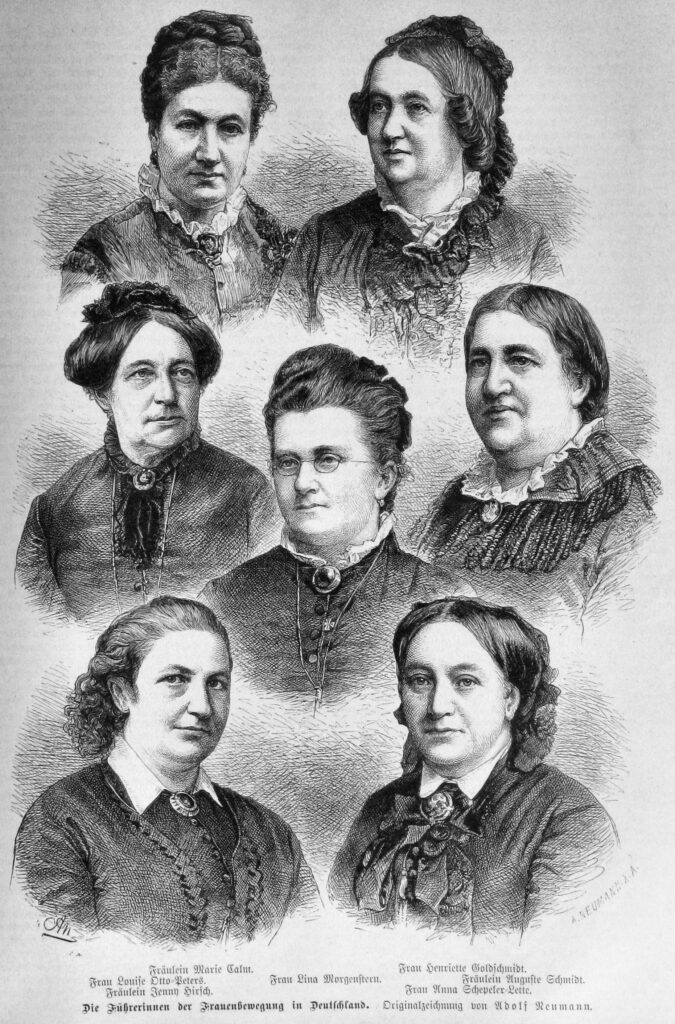
Booksellers‘ Fair, Leipzig, Saxony. A pivotal moment in the women’s movement during the German Empire was the founding of the General German Women’s Association (ADF) in 1865 at the Women’s Conference in Leipzig. The conference was initiated by Louise Otto-Peters and Auguste Schmidt. The conference participants called for educational equality and better career opportunities for women and drew attention to prevailing injustices in the legal system and the education system.
Captioned “The Leaders of the Women’s Movement in Germany,” the image shows, from top left to bottom right, Marie Calm, Henriette Goldschmidt, Louise Otto-Peters, Lina Morgenstern, Auguste Schmidt, Jenny Hirsch, and Anna Schepeler-Lette. The illustration appeared in 1883 in the magazine Die Gartenlaube.
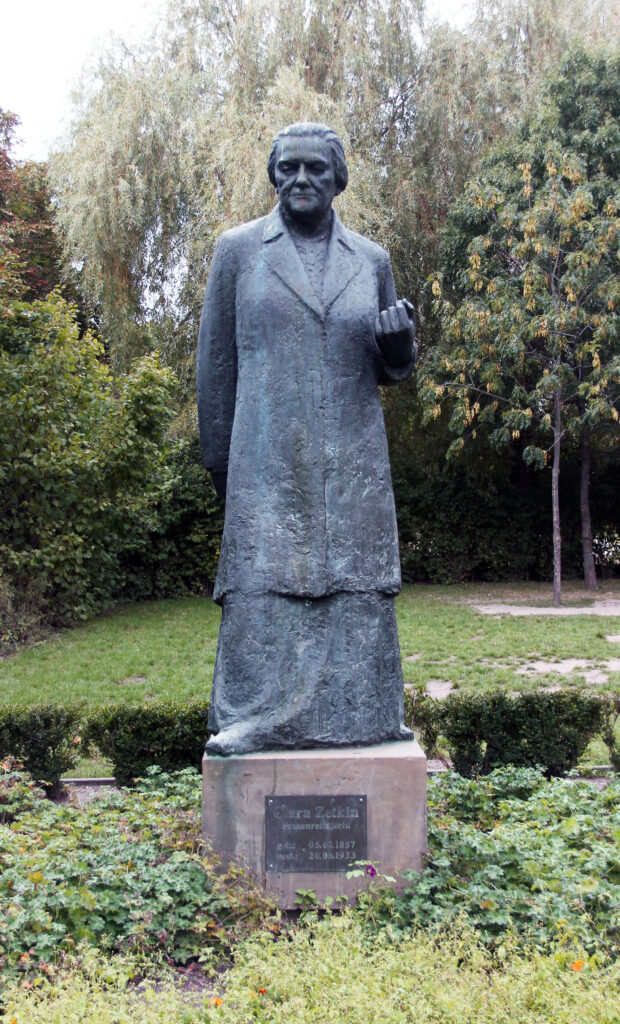
Clara Zetkin Monument, Berlin. The Clara Zetkin Monument in Berlin commemorates a prominent pioneer of the proletarian women’s movement and the founder of International Women’s Day. Zetkin shaped the women’s movement as a socialist and later as a member of the KPD in the Reichstag of the Weimar Republic. There, she advocated for equality in the workplace and social rights for women. The proletarian women’s movement fought in particular for emancipation in the workplace and combined socialist and feminist demands. Zetkin’s work stands for equality that was intended to reach all social classes.
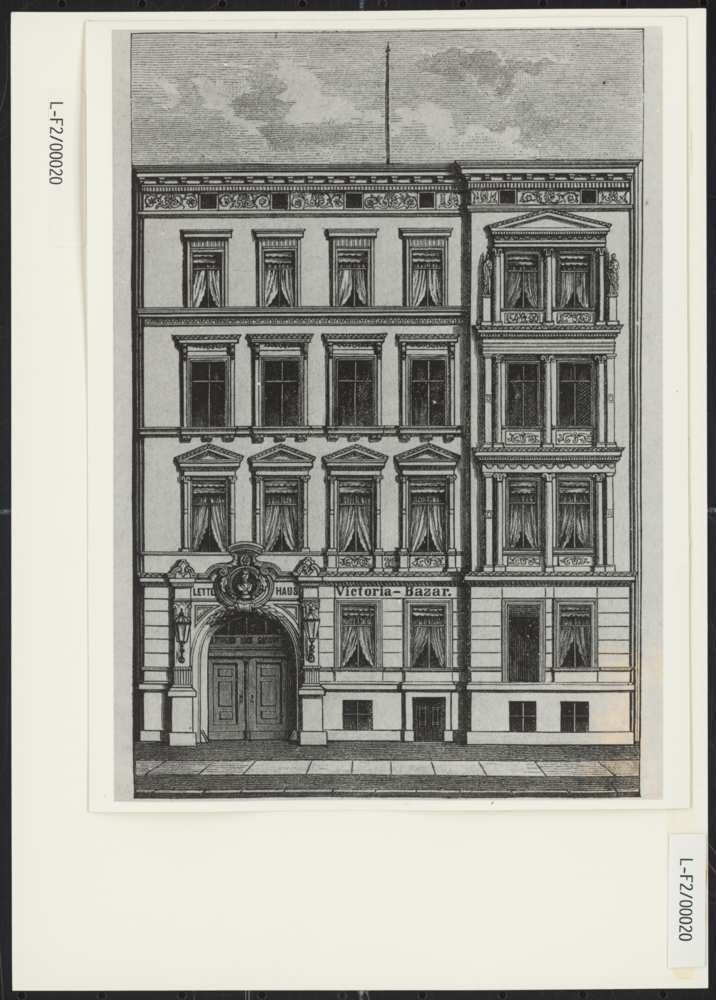
Lette-Haus, Berlin. On March 28, 1894, the Federation of German Women’s Associations (BDF) was founded at the Lette-Haus in Berlin. Representatives from 34 women’s organizations thus created an overarching platform to unite the fragmented women’s movement and integrate charitable women’s activities into the political women’s movement. The BDF advocated for better educational and employment opportunities for women, as well as for legal equality.
Where Women’s Rights Came to Life
The history of political equality between men and women has been anything but straightforward. Political recognition and participation were prerequisites for securing fundamental rights to education, work, and personal freedoms. These sites illustrate the long journey toward equality in the 20th century, from legal achievements to political breakthroughs.
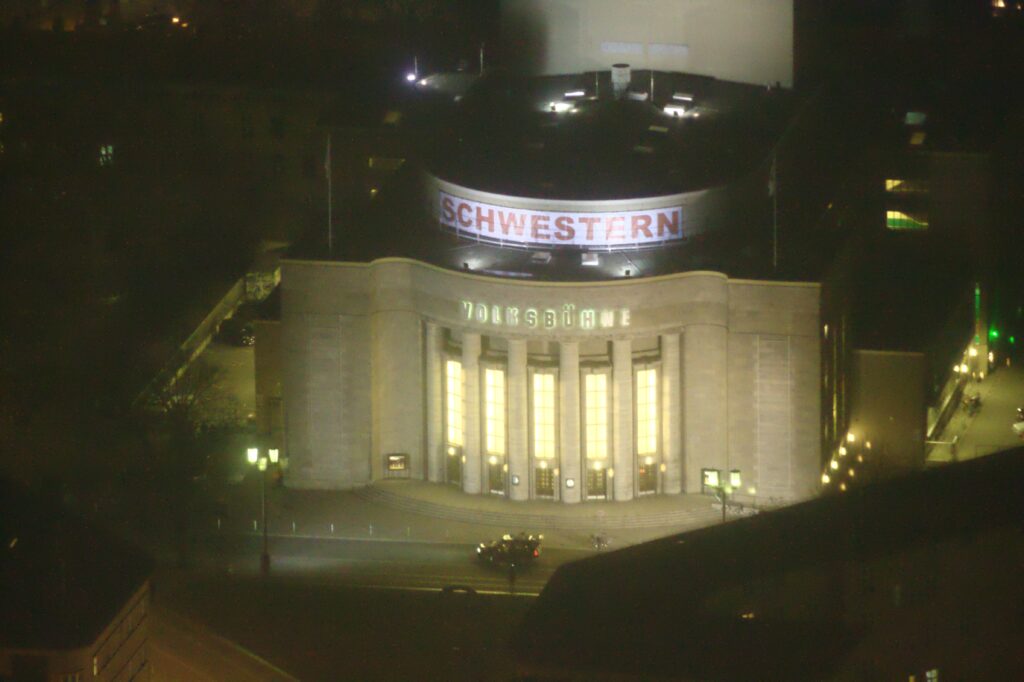
Berliner Volksbühne, Berlin. In the fall of 1989, the Berliner Volksbühne became an important hub for the GDR women’s movement. On December 3, approximately 1,200 women from more than 60 different groups gathered there to found the Independent Women’s Association (UFV) as an umbrella organization. This event marked a significant step in the autonomous organization of the women’s movement, which deliberately distanced itself from state-controlled organizations such as the Democratic Women’s Union of Germany (DFD). Just a few days after its founding, the association sent two representatives to the Central Round Table to help shape the processes of change in the GDR.
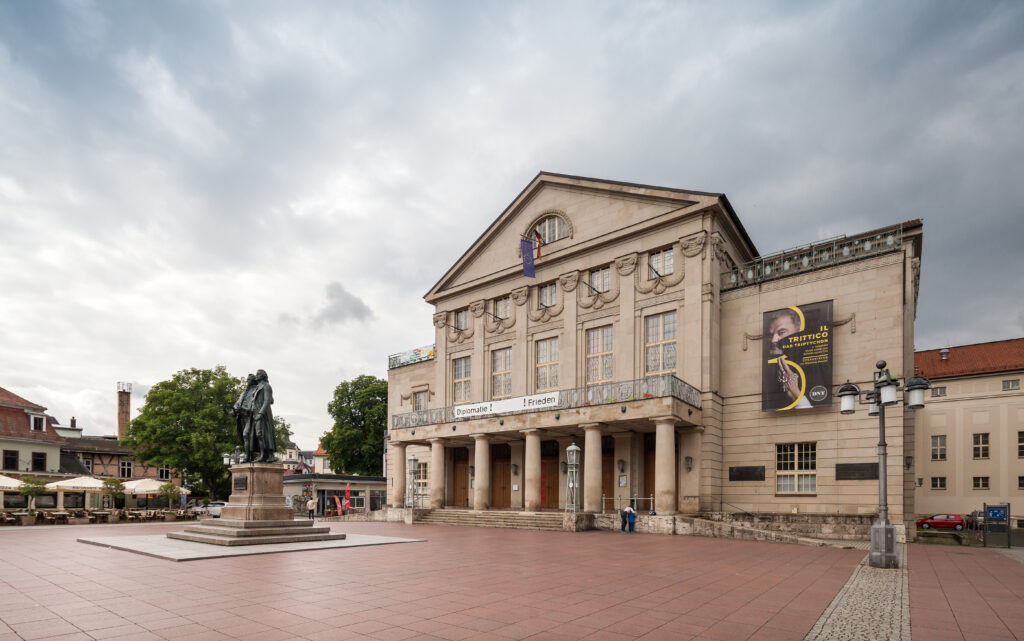
German National Theater, Weimar, Thuringia. The German National Theater symbolizes the dawn of a society in which women’s voices were given weight in government decision-making processes for the first time. In the 1919 election for the National Assembly, women were allowed to vote and run for office for the first time: Among the 423 members of parliament were 37 women. Their participation was revolutionary and symbolized the beginning of their involvement in Germany’s political institutions. The introduction of women’s suffrage marked a turning point and anchored legal equality in the young democracy.
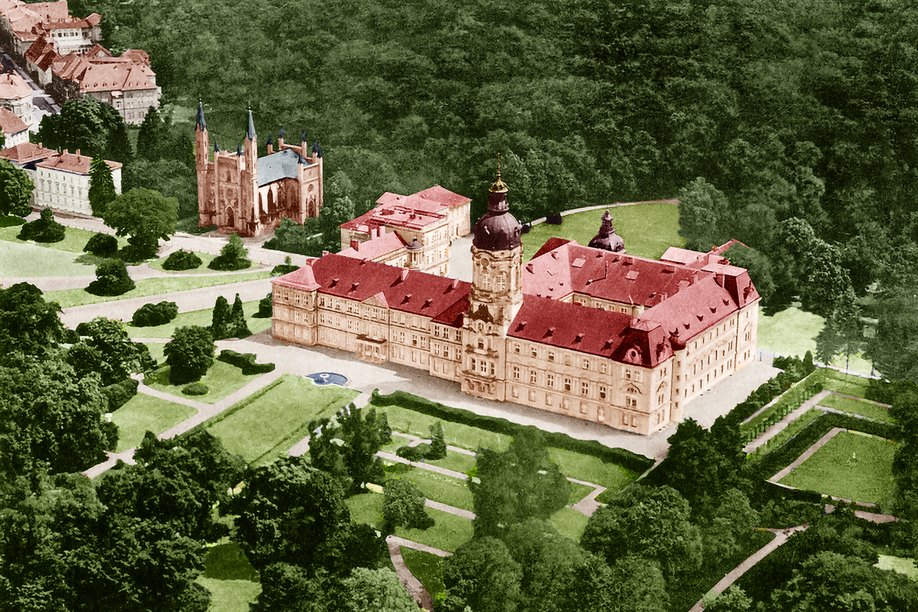
Mecklen-Strelitz State Parliament, Neustrelitz, Mecklenburg-Western Pomerania. Mecklen-Strelitz made history on December 15, 1918: Social Democrat Erna Weiland became the first woman to be elected to a German parliament. As a member of the State Parliament, she was part of the constituent assembly. The State Parliament convened at the Neustrelitz Residential Palace. Today, a simple yet symbolic monument stands in its place, commemorating the early work of the parliament. Weiland, however, was not the first woman to speak before a German parliament. That honor went to Marianne Weber, who delivered a speech to the Baden State Parliament on January 15, 1919.
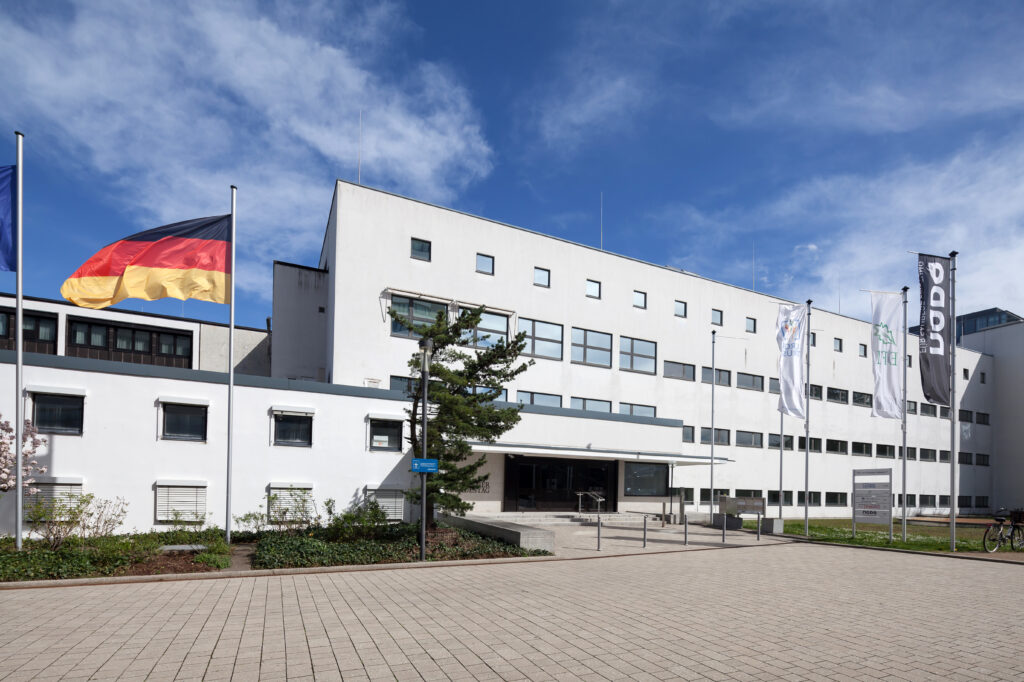
Pedagogical Academy, Bonn, North Rhine-Westphalia. In 1944, the Parliamentary Council met here to draft the Basic Law of the Federal Republic of Germany. Among the 65 delegates were four women: Friederike Nadig, Elisabeth Selbert, Helene Wessel, and Helene Weber. Today they are regarded as the “Mothers of the Basic Law” and, among other things, championed Article 3(2): “Men and women have equal rights.” This provision imposed an obligation on the legislature to amend all other laws that conflicted with it accordingly. In the draft produced by the Constitutional Convention at Herrenchiemsee, which served as the basis for the Parliamentary Council, gender equality had not yet been explicitly enshrined. In the wake of German reunification, a sentence was added to the article: “The state shall promote the actual implementation of equality between women and men and work toward the elimination of existing disadvantages.”
Bildquellen
- Fassade des Lette-Hauses in der Königgrätzer Straße 90 in Berlin: Archiv des Lette-Vereins LV_Archiv_A_113_01_F2_00020_a, gemeinfrei
- Berliner Volksbühne: Wikipedia and Wikimedia Commons user Aktron
- Deutsches Nationaltheater Weimar: Stiftung Orte der deutschen Demokratiegeschichte
- Landtag Mecklen-Strelitz, Neustrelitz: Jürgen Haase, Dr. Rajko Lippert & diverse — Residenzschlossverein Neustrelitz e. V. (genehmigt), gemeinfrei
- Pädagogische Akademie Bonn: Stiftung Orte der deutschen Demokratiegeschichte